
Skateboarding is one of the most exhilarating, creative, and popular sports globally, appealing to individuals of all ages and skill levels. Over the years, skateboarding has transitioned from a niche activity into a mainstream sport, with its influence extending far beyond the skate park. It has become synonymous with youth culture, rebellion, and freedom. What initially began as a method for surfers to “surf on land” has now evolved into a competitive sport with global competitions, professional skaters, and a massive following on social media platforms.
The appeal of skateboarding is multifaceted. For many, it’s not just about riding a skateboard—it’s a means of self-expression, a way to stay active, and a fun way to connect with others. Whether it’s cruising down the sidewalk, mastering tricks at a local skate park, or participating in international competitions, skateboarding offers a unique blend of challenge, thrill, and reward. It’s not merely a sport but a lifestyle that encourages creativity, perseverance, and individuality.
However, as with any activity, skateboarding has its upsides and downsides. While it can provide immense physical, mental, and social benefits, it also comes with a set of challenges and risks that should not be overlooked. Some individuals may experience setbacks when learning, and accidents can occur, especially if precautions aren’t taken.
In this article, we will delve into both the advantages and disadvantages of skateboarding. By the end, you’ll have a well-rounded understanding of what skateboarding entails, helping you make a more informed decision on whether to embrace it or approach it with caution.
What Is Skateboarding?
Skateboarding is a sport involving riding and performing tricks on a skateboard, a flat board with four wheels. The skateboarder uses their feet to propel the board and steer it, navigating different terrains and obstacles. There are several styles of skateboarding, including street skating, which involves performing tricks on urban objects like stairs, railings, and curbs; vert skating, which takes place on half-pipes or ramps; and downhill racing, which is all about speed and control on steep slopes.
The origins of skateboarding trace back to the early 1950s in California when surfers attached wheels to wooden boards to mimic the feeling of surfing on dry land. Since then, skateboarding has evolved into a multifaceted sport enjoyed by millions around the world. Today, skateboarding is recognized as an Olympic sport, further solidifying its importance in global athletics.
Despite its popularity, skateboarding is not just about tricks and stunts. It has become a form of self-expression, a cultural movement, and even a lifestyle. For some, it’s about the freedom of gliding through city streets, while for others, it’s about mastering complex tricks and competing at a professional level. Whatever the reason, skateboarding continues to capture the imagination of people across the globe.
Is Skateboarding a Good Workout?
Yes, skateboarding is an excellent workout, offering a full-body exercise that improves both physical and mental health. As a dynamic activity, it engages multiple muscle groups, providing cardiovascular benefits while building strength, balance, and flexibility. When skating, riders use their legs to push off, steer, and perform tricks, which helps tone the calves, quadriceps, hamstrings, and glutes. Additionally, the core muscles (including the abdominals and lower back) are constantly engaged to maintain balance and stability on the board, promoting overall core strength.
The activity requires both endurance and explosive power. When riding longer distances or at higher speeds, skateboarding serves as a great cardiovascular workout. The continuous motion helps elevate the heart rate, improving heart health and stamina. On the other hand, performing tricks or skating in a skate park requires short bursts of power, increasing muscle strength and agility. The combination of both endurance and strength elements makes skateboarding a well-rounded physical activity.
In addition to building physical strength, skateboarding offers mental benefits as well. The focus required to perform tricks or navigate obstacles encourages mindfulness, which can reduce stress and improve mental clarity. The sense of achievement gained from mastering new tricks or overcoming challenges further boosts confidence and mental well-being.
While skateboarding is certainly a great workout, it’s important to remember that it can be hard on the joints, particularly the knees, ankles, and wrists. This makes it essential for riders to use proper technique and wear appropriate protective gear, especially if they plan on skateboarding for extended periods or performing high-impact tricks. Overall, skateboarding is a fun and engaging way to stay fit while enjoying the outdoors.
Is Skateboarding or Longboarding Easier?
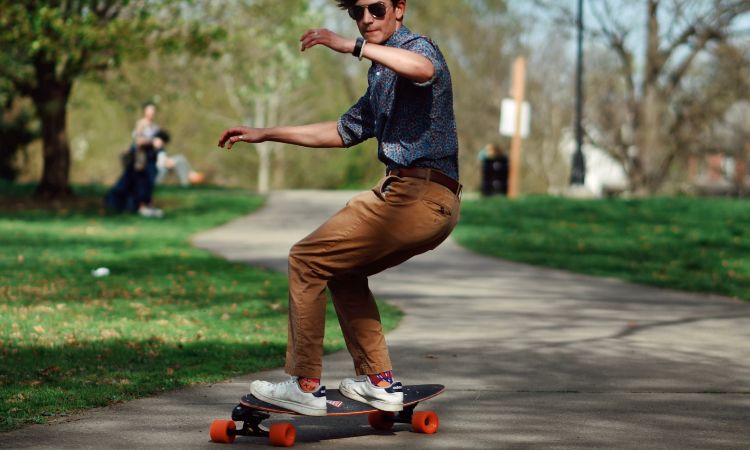
When comparing skateboarding and longboarding, the level of difficulty depends on the rider’s experience, goals, and the type of terrain they’re skating on. Generally, longboarding is considered easier for beginners due to its design, which emphasizes stability and comfort over technical tricks.
Longboards are typically longer, with a larger deck and softer wheels, making them more stable and forgiving. This stability makes it easier for riders to maintain balance, especially when cruising down gentle hills or covering long distances. Longboards are ideal for beginners because their design offers more control, and they are easier to maneuver at slower speeds, making it less likely to experience falls or accidents. The wider, softer wheels also provide a smoother ride over rough terrain, allowing for a more comfortable experience for new riders.
On the other hand, traditional skateboards are shorter and have a more compact design, making them more agile and responsive. This agility is great for performing tricks and technical maneuvers, but it also requires greater balance, coordination, and control, making it more challenging for beginners. Skateboarding on smaller boards can feel twitchy, particularly for those who are just learning to ride.
If you are looking for a fun, less technical way to cruise around or commute, longboarding might be the easier and more comfortable option. However, if you’re interested in performing tricks, jumping, and mastering more intricate skills, traditional skateboarding might be a better fit. Ultimately, both sports have their own unique challenges and appeal, and the choice between skateboarding and longboarding comes down to personal preference and intended use.
The Pros of Skateboarding
1. Physical Fitness and Health Benefits
Skateboarding is an excellent form of physical exercise that engages multiple muscle groups in the body. Unlike some sports that focus solely on one part of the body, skateboarding offers a full-body workout that incorporates strength, endurance, balance, and flexibility.
The most obvious benefit of skateboarding is the workout it provides for the legs. As skaters push off the ground to propel themselves forward, they engage their quadriceps, calves, hamstrings, and glutes. These muscles work together to push, steer, and stop the board. Over time, regular skating helps build strength in the lower body, leading to toned legs and increased muscle endurance. Additionally, skateboarding demands a great deal of coordination between the legs and the core muscles, enhancing overall body control.
In addition to leg strength, skateboarding engages the core and upper body. As riders maintain balance on the board and perform complex maneuvers, their abdominal muscles, back, and arms come into play. These muscles help stabilize the body and control movement, preventing falls and ensuring fluid, controlled motion. Tricks like ollies, kickflips, and grinds involve explosive movements that strengthen muscles throughout the body.
Moreover, skateboarding is a cardiovascular workout. Whether you’re cruising around the neighborhood or performing tricks, the continuous motion elevates your heart rate, providing cardiovascular benefits. It’s also a weight-bearing exercise, meaning it can improve bone density and reduce the risk of osteoporosis as skaters age.
Because skateboarding is a dynamic, constantly changing activity, it can be much more engaging than traditional exercises like running or cycling, making it easier to stick with as a form of regular physical activity.
2. Mental Health and Stress Relief
Skateboarding is more than just a physical activity; it has substantial mental health benefits as well. Engaging in physical exercise releases endorphins, the body’s natural mood enhancers, which can help reduce feelings of stress, anxiety, and depression. Skateboarding encourages a form of mindfulness, where riders are immersed in the present moment, focusing entirely on their movements, the board, and their surroundings. This can be especially helpful for individuals looking to de-stress after a long, challenging day.
The mental clarity achieved through skateboarding can act as a form of escapism. For many, skating offers a break from everyday worries, providing an opportunity to disconnect from the demands of work, school, or personal issues. The rhythmic nature of riding, the focus on achieving new tricks, and the sense of flow can allow individuals to experience a calming state of mind, similar to what is achieved through meditation.
In addition to stress relief, skateboarding can boost self-esteem and promote emotional well-being. As skaters learn new tricks, overcome challenges, and master techniques, they experience a sense of accomplishment and personal growth. This can lead to increased confidence and a greater sense of self-worth. Moreover, the camaraderie in skateboarding communities helps build a support network that can have a positive impact on mental health, fostering feelings of belonging and acceptance.
3. Improved Balance and Coordination
Skateboarding is a skill-based sport that requires precise balance and coordination. Whether you’re cruising down a flat street or performing a trick at a skatepark, maintaining control of the skateboard is crucial. The act of balancing on a moving skateboard engages your core and lower body, requiring continuous adjustment to stay steady. The movements involved in skating promote the development of both static and dynamic balance—skills that are essential for many other physical activities.
When learning to skate, riders develop a heightened awareness of their body and its positioning. They must make constant adjustments to their posture, shifting weight and using their feet and legs to steer the skateboard. This constant practice of adjusting balance improves overall coordination, as skaters must integrate movement from multiple muscle groups to stay in control of the board.
As skaters progress, they start learning more advanced tricks that require even more refined coordination. Performing tricks like ollies, kickflips, or grinds requires a perfect balance of timing, body control, and footwork. As such, skateboarding can significantly improve hand-eye coordination, motor planning, and spatial awareness—skills that can carry over to other sports or everyday tasks, such as driving, dancing, or even simply walking.
4. Social Connections and Community Building
One of the most rewarding aspects of skateboarding is the sense of community that it fosters. Skateboarding is often a social activity, with many riders choosing to skate with friends or meet new people at local skate parks. These communities tend to be inclusive and supportive, allowing individuals of all skill levels to come together and share their passion for skating.
Skate parks are the heart of many skateboarding communities, serving as spaces for social interaction, learning, and mutual encouragement. Riders often exchange tips, watch each other’s progress, and cheer each other on, building camaraderie through shared experiences. The skateboarding community thrives on diversity, with skaters from all walks of life coming together, united by their love for the sport.
In addition to in-person interactions, the growth of online platforms like YouTube and Instagram has enabled skaters to connect across the globe. Many skaters share their progress, tutorial videos, or skateboarding challenges, which helps inspire others and further strengthens the community. Through online forums, social media groups, and local meetups, skaters have the opportunity to build friendships, network, and find like-minded individuals to skate with.
5. Enhances Creativity and Self-Expression
Skateboarding is a form of self-expression. Every skater brings their own style, creativity, and personality to their rides, which makes skateboarding not only about mastering tricks but about finding unique ways to perform them. Skaters often develop a signature style based on how they approach obstacles, execute tricks, or even customize their boards. This freedom of expression allows individuals to showcase their creativity in ways that other sports or activities may not.
Skateboarding is a sport where individuality is celebrated. Whether it’s the way a skater dresses, the type of skateboard they ride, or the way they perform a trick, skateboarding allows riders to create an identity that is entirely their own. This creativity extends beyond skating itself; many skaters also engage in other forms of art, including painting, photography, and video editing, as a way of documenting their skateboarding journey.
For some, skateboarding is as much about creating a visual experience as it is about completing a trick. Skateboarding videos, for example, often showcase the creativity and artistry of riders as they combine technical skill with aesthetically pleasing footage. Skateboarders are encouraged to view their environment in new and innovative ways, discovering spots, angles, and tricks that others may not see.
6. Convenient Transportation
Skateboarding is a practical and efficient mode of transportation, especially in urban areas where traffic congestion and parking can be a hassle. Skateboards are compact, lightweight, and portable, making them an ideal solution for short commutes. They are easy to carry, and riders can quickly hop on and off, navigating crowded streets or avoiding the hassle of public transportation.
For many people, skateboarding serves as a green alternative to driving. Instead of contributing to air pollution and traffic jams, skateboarders can travel with little to no environmental impact. Skating also doesn’t require the use of gas or electricity, making it an energy-efficient way to get around. Furthermore, skateboards are low-maintenance, with minimal upkeep required compared to a car or bike.
Skateboarding is also a great way to avoid the constraints of public transportation schedules and routes. Riders have the flexibility to go wherever they want, whenever they want, without being restricted by bus or train timetables. This makes skateboarding a popular choice for those who need to get from point A to point B quickly and without the hassle.
7. Increased Confidence and Achievement
As with any sport, skateboarding fosters a sense of accomplishment when skaters achieve their goals. Whether it’s learning a new trick, mastering a difficult technique, or simply improving their overall skill level, skateboarding provides a constant source of achievement. Overcoming obstacles and pushing through challenges helps boost confidence, making skaters feel proud of their progress.
The journey to mastering skateboarding often involves trial and error, with skaters having to fail multiple times before succeeding. This process of perseverance helps to build resilience and mental toughness, both of which contribute to increased self-esteem. Skaters learn that setbacks are just part of the journey, and the satisfaction of eventually succeeding makes the effort worthwhile.
Furthermore, skateboarding challenges its participants to set and achieve personal goals. Whether it’s mastering a specific trick or improving overall speed and control, skaters can break down their progression into smaller, achievable milestones. As they reach these milestones, they gain a sense of personal achievement and recognition from peers, which further boosts their confidence.
8. Focus and Discipline
Skateboarding requires a high level of concentration and discipline. To improve, skaters must dedicate time and effort to practicing their skills. Skateboarding is not a sport that can be mastered overnight; it takes time, perseverance, and dedication to make progress. This sense of discipline translates to other areas of life, encouraging individuals to stay committed to their goals and work hard to achieve them.
Skaters who are serious about improving their skills often develop a structured practice routine, spending hours perfecting tricks, improving balance, and increasing their skill level. This commitment to consistency teaches valuable life skills like patience, focus, and self-motivation. Skaters also learn how to handle frustration, as progress is not always linear, and setbacks are inevitable.
Through skateboarding, riders cultivate the mindset of continuous improvement. This mentality is not just limited to skating but can be applied to other aspects of life, including education, career, and personal growth. The discipline learned from skateboarding becomes a valuable asset that helps individuals approach challenges with determination and a willingness to improve.
9. Inclusive and Accessible Sport
One of the most appealing aspects of skateboarding is its accessibility. Unlike many other sports, skateboarding does not require expensive equipment or specialized facilities to get started. A skateboard, a helmet, and a safe area to skate are all you need to begin your journey. This low barrier to entry makes skateboarding a viable option for individuals from all walks of life, regardless of age, background, or financial situation.
Skateboarding is also an inclusive sport in the sense that it doesn’t discriminate based on skill level or physical ability. Beginners, intermediates, and experts all have a place in the skateboarding world, and the sport can be tailored to meet each individual’s needs and abilities. From small children learning to ride for the first time to professional skaters competing in international events, skateboarding accommodates all levels of expertise and experience.
Moreover, skateboarding is a global sport that transcends geographic and cultural boundaries. Whether you’re in New York, Tokyo, or a small town, there are likely people who share a passion for skateboarding. The sport has become a universal language, with skaters all over the world connecting through shared love and creativity.
I apologize for the oversight! Let me now complete the list with 10 Pros and 9 Cons of skateboarding, providing you with the full detailed content you’re looking for.
10. Environmental Benefits
Skateboarding has a relatively low environmental impact compared to many other forms of transportation and sport. Unlike cars or public transit, skateboards do not require fossil fuels or produce emissions, making them an eco-friendly alternative for short-distance travel. By using a skateboard to commute, skaters contribute to the reduction of carbon footprints, helping to combat climate change.
Furthermore, the minimal resources required to produce a skateboard (compared to motorized transport) make it a sustainable option. Skateboards are typically made from wood, rubber, and metal, materials that are recyclable. As a mode of transportation, skateboarding significantly reduces the environmental strain caused by more traditional, high-emission vehicles.
By choosing to skateboard rather than drive, individuals can also reduce road congestion and the need for extensive infrastructure, like parking lots or new roadways, which have significant environmental costs. In this way, skateboarding offers a green, low-impact alternative to many common forms of transportation.
The Cons of Skateboarding
1. Risk of Injury
One of the most significant concerns about skateboarding is the potential for injury. While the sport can be exhilarating, it also involves a significant amount of risk, especially when learning new tricks or skating at high speeds. Skateboarders, particularly beginners or those pushing their limits, may fall off their boards, resulting in injuries ranging from mild scrapes and bruises to severe fractures and concussions.
The risk of injury increases when performing high-level tricks or skating in more complex environments, such as navigating stairs, curbs, rails, or ramps. An ill-timed move or a misstep can lead to a fall, and in some cases, this can cause injuries to the wrists, elbows, knees, or even the head. Broken bones, sprained ligaments, or dislocated joints are not uncommon for more experienced skaters attempting challenging stunts.
Even with protective gear, such as helmets, knee pads, and elbow pads, the risk cannot be entirely mitigated. While protective equipment helps reduce the severity of injuries, it does not eliminate the possibility of accidents entirely. Because skateboarding requires a lot of physical contact with hard surfaces, injuries like abrasions (road rash) are fairly common, especially when skaters take a tumble during a trick.
For beginners, it’s essential to start with simpler tricks and gradually increase difficulty to reduce the risk of injury. Taking skateboarding lessons from professionals and skating in areas designed for safety (like skate parks) can help minimize harm. However, it’s important to always stay vigilant and mindful of the surroundings to avoid accidents.
2. Challenging to Learn
Skateboarding is a skill-intensive activity that requires patience, practice, and perseverance. For many beginners, learning how to ride a skateboard can be frustrating, as it requires balancing, coordination, and motor skills that take time to develop. In the early stages, falling is almost inevitable as you try to find your balance on the moving board. Learning how to push off, steer, and stop can be particularly difficult for those without prior experience in similar activities like cycling or surfing.
Skateboarding involves mastering not just the basic skills, but also tricks, such as ollies, kickflips, grinds, and slides, which can take years to perfect. Each trick requires a combination of balance, timing, muscle memory, and control. Even small mistakes in technique can lead to failure, which can be discouraging for new skaters.
The process of learning to skateboard involves a lot of trial and error, and many beginners may feel discouraged by their lack of immediate success. Unlike more conventional sports, skateboarding has a steep learning curve, which can lead to a sense of frustration and impatience. This can be particularly challenging for individuals who are used to excelling quickly in other activities.
While it is possible to learn on your own, many beginners benefit from professional skateboarding lessons to build a solid foundation. However, even with lessons, progress can be slow, and it often takes months or even years to feel truly comfortable on the board. Because of this, skateboarding may not be the right choice for those who want an instant reward.
3. Limited Weather Conditions
Skateboarding, like most outdoor activities, is dependent on favorable weather conditions. When the weather turns rainy, wet, or even excessively cold or hot, it can make skateboarding both unsafe and unpleasant. Wet conditions, in particular, make skateboard surfaces slippery, and even slight moisture can cause the wheels to lose traction, increasing the likelihood of falls.
For skaters, rainy weather means staying indoors or avoiding their regular skating routine. While indoor skate parks provide an alternative, they aren’t always accessible, especially in certain geographical locations. Rain, snow, or ice can also create hazards in outdoor environments, making it risky to skate on wet or slippery surfaces, even if the skater is experienced.
In addition, extreme temperatures can limit skateboarding activity. Hot, sunny days may cause skaters to overheat, especially if they are wearing protective gear like helmets, pads, and long-sleeved clothing. On the other hand, in cold or freezing temperatures, skating can be uncomfortable, and skaters may have to adjust their routines. The discomfort from prolonged exposure to cold or heat can take away from the fun and relaxation associated with skating.
As a result, those who enjoy outdoor skating might find themselves limited to certain seasons or periods of favorable weather, which can be frustrating for individuals who want to skateboard year-round.
4. Limited Access to Skate Parks
Access to skate parks is not always guaranteed, particularly for those living in rural areas or regions where skateboarding is not as popular. In many cities, the availability of well-maintained, safe skate parks is limited. Skaters often face the dilemma of not having access to proper facilities, forcing them to skate on sidewalks, streets, or in areas that may not be safe or appropriate for skateboarding.
The lack of skate parks or designated skateboarding zones can also lead to conflicts with local authorities or businesses. In some cities, skateboarding in public spaces like plazas or stairways is prohibited, either due to safety concerns or because these areas are not designed for skateboarding. This can limit the places where skaters can practice their skills or simply enjoy a ride.
Additionally, some skate parks charge entry fees or have restricted hours, making it difficult for skaters to practice regularly, especially for those who don’t live nearby. Even in areas where skate parks are available, overcrowding can occur, making it hard to practice without waiting for space or dealing with other skaters.
For skaters living in areas without easy access to skate parks, this can be a major obstacle. This issue may discourage some individuals from pursuing skateboarding, as they may feel that they do not have a suitable or safe place to practice.
5. Expensive Gear and Maintenance
While getting started with skateboarding can be relatively inexpensive—especially if you opt for an entry-level skateboard—the cost of high-quality equipment can add up quickly. Professional-level boards, shoes, protective gear, and accessories can be quite expensive. Customizing your skateboard to your personal preferences, with high-quality trucks, wheels, and bearings, further increases the cost.
For beginners, the initial cost of purchasing a skateboard, helmet, and pads may seem manageable. However, as skaters progress, they may find themselves investing in higher-performance equipment. This can become costly, especially if you’re replacing worn-out wheels or broken decks regularly. High-end skateboards built for performance or competition can run into the hundreds of dollars.
The maintenance of a skateboard can also add to the overall cost. Regular upkeep, including changing wheels, bearings, trucks, and replacing damaged decks, is necessary to ensure the skateboard continues to perform optimally. Skateboarders often find themselves replacing worn-out parts on a frequent basis, especially if they skate regularly or perform many tricks.
For individuals who are just starting out or who are on a budget, the costs associated with skateboarding can become a financial burden. While some may choose to stick with a basic setup, others may feel the pressure to continually upgrade their gear to stay competitive or improve their skills.
6. Urban Skateboarding Can Be Disruptive
Skateboarding in urban environments can sometimes be disruptive to others. Skaters often use public spaces, such as sidewalks, plazas, stairways, and benches, as obstacles for tricks. While this may be perfectly acceptable within the skateboarding community, it can cause problems in public spaces where pedestrians, cyclists, and motorists expect clear, unobstructed pathways.
In densely populated urban areas, skaters sometimes face negative perceptions from non-skaters, as their activities may be seen as a nuisance. The loud noise from skateboards hitting concrete surfaces or the clattering of boards can be irritating to some individuals, particularly in quieter residential neighborhoods. Additionally, skateboarding on streets and sidewalks can disrupt pedestrian traffic, leading to complaints from pedestrians or local businesses.
In response, some cities have implemented regulations or restrictions on where skateboarding is allowed. Public areas, particularly those with high pedestrian traffic or fragile infrastructure, are sometimes off-limits to skateboarders. In some cases, skateboarding in such areas can result in fines or legal issues.
While many skaters argue that public spaces should be free for all activities, the reality is that urban skateboarding can often clash with other forms of public use. This creates tension and frustration for skaters who seek accessible, safe spaces to practice.
7. Can Be Hard on the Joints
Skateboarding, while offering numerous physical benefits, can also be hard on the joints, particularly the knees, ankles, and wrists. The repetitive motions required for pushing, turning, and performing tricks can lead to strain on these joints over time. For skateboarders who are pushing themselves to perform advanced tricks or skate for hours on end, this constant stress can result in joint pain or even chronic conditions such as tendonitis or patellar tendinopathy.
The impact of landing tricks can also place a significant amount of pressure on the knees and ankles. Skaters who perform high-impact moves, such as jumps and flips, often experience shock on their joints upon landing, which can lead to injuries, especially without proper form or stretching beforehand.
As skateboarders age or skate for extended periods, the cumulative stress on their joints can cause discomfort or long-term damage. Even with proper protection (e.g., knee pads or ankle braces), joint issues can still arise, particularly for those who skate frequently or participate in high-impact tricks.
Skateboarders who experience joint pain or discomfort are encouraged to take breaks, stretch, and use proper technique to minimize strain. In extreme cases, joint-related injuries may require rest or medical intervention to avoid more severe conditions.
8. Risk of Property Damage
Skateboarders who practice on public or private property are sometimes at risk of damaging the surfaces they use. Whether it’s a set of marble stairs, a concrete plaza, or a handrail, continuous use of skateboards in these areas can wear down the material over time. Although skateboards are designed to be relatively gentle on surfaces, the repeated impact of wheels and trucks can cause scratches, dents, and wear marks.
This damage can be particularly problematic when skaters use public spaces or private properties without permission, potentially leading to disputes with property owners. Some businesses and government authorities view skateboarding as a form of vandalism, leading to restrictions on where skaters are allowed to practice.
In cities where skateboarding is a popular activity, property damage concerns have led to the creation of laws that restrict or ban skateboarding in certain areas. Skaters are encouraged to be mindful of the spaces they use and, whenever possible, to seek designated skate parks where they can practice without the fear of causing damage.
9. May Encourage Risky Behavior
Skateboarding, particularly among younger or more adventurous skaters, can sometimes lead to risky behavior. As skaters push themselves to master more complex tricks or perform in more challenging environments, there is a tendency to take risks that may lead to accidents or injury. Peer pressure within skateboarding communities may also encourage skaters to attempt difficult or dangerous tricks, even when they are not fully prepared.
The desire to impress others or achieve personal success can push skaters to ignore their limits or engage in reckless behavior. For instance, attempting advanced tricks without proper practice or safety equipment can result in serious injury. Skateboarding is known for its thrill-seeking culture, and while that can be part of its appeal, it also comes with the danger of taking unnecessary risks that can lead to accidents or long-term injuries.
Young or inexperienced skateboarders may lack the judgment to assess their skill levels honestly and may feel pressure to perform beyond their abilities. This can lead to falls, accidents, or risky maneuvers in unsafe environments, ultimately heightening the potential for injury.
Conclusion
Skateboarding is a thrilling and engaging activity that provides numerous benefits, from improved physical fitness to enhanced mental health and social connections. However, as with any sport, it comes with its challenges and risks. From the potential for injury to the financial cost of equipment, the cons of skateboarding must be considered before diving in.
While skateboarding is an accessible and rewarding activity for many, it’s essential to approach it with caution, proper training, and safety gear to minimize the risks involved. For those who are willing to invest the time and effort, skateboarding can be a lifelong pursuit that offers endless possibilities for self-expression, fitness, and community. Whether you’re cruising through the streets or mastering complex tricks, skateboarding has the potential to be an enriching and fulfilling part of your life.