
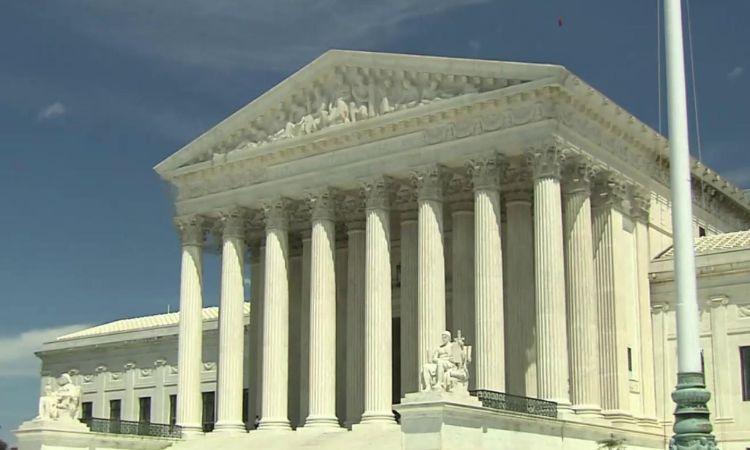
The United States Supreme Court, as the highest judicial body in the nation, plays a vital role in interpreting the Constitution, ensuring justice, and resolving disputes that shape the country’s legal landscape. Its decisions have a far-reaching impact on public policy, individual rights, and the political climate. The idea of expanding the Supreme Court, often referred to as “court-packing,” has been the subject of ongoing debate, particularly as the Court’s ideological balance has shifted in recent years.
The concept of increasing the number of justices on the Supreme Court is not a new one. In fact, the idea dates back to the 1930s during President Franklin D. Roosevelt’s administration when he proposed adding justices to the Court to break a series of judicial blockages to his New Deal legislation. Despite the failure of Roosevelt’s proposal, the conversation about court expansion has resurfaced periodically, particularly when the Court’s composition is perceived as ideologically imbalanced or when political forces seek to influence judicial rulings.
The current Supreme Court has nine justices, a number that has been in place since 1869. Proponents of expanding the Court argue that doing so could lead to a more balanced, representative, and effective judicial system. They believe that a larger Court could help resolve the challenges posed by a growing caseload, political polarization, and the need for greater diversity in judicial decision-making.
However, critics of expanding the Court warn that such a move could undermine the Court’s integrity, lead to further political polarization, and erode public trust in the judicial system. They argue that increasing the number of justices could open the door to partisan manipulation and set a dangerous precedent for future political interference with the judiciary.
This article will explore both the advantages and disadvantages of expanding the Supreme Court, presenting 10 pros and 10 cons in an effort to provide a comprehensive and balanced perspective on the topic. By examining these points in detail, we aim to offer readers a clear understanding of the potential impacts of expanding the Court.
Pros of Expanding the Supreme Court
1. Increased Diversity of Perspectives
One of the most compelling arguments in favor of expanding the Supreme Court is the potential for a broader diversity of perspectives. Currently, the Court’s nine justices are overwhelmingly from similar educational and professional backgrounds, and they often share similar ideological views, especially with the recent conservative shift. By expanding the Court, the opportunity arises to bring in justices with a wider range of legal experiences, political ideologies, and life experiences. This could include more justices from marginalized groups, including women, racial and ethnic minorities, and those with diverse socioeconomic backgrounds.
Diversity on the Supreme Court would also mean a wider array of interpretations when it comes to interpreting the Constitution and deciding cases. Different justices may approach legal issues with varying methods of reasoning and analysis, leading to richer discussions and more robust decisions. This diversity could help ensure that the Court does not become too monolithic in its approach to legal questions, but rather represents the broader diversity of American society. A Court made up of justices who have distinct and varied viewpoints could be better equipped to handle the complex legal and social issues that the country faces.
Moreover, a diverse Court could potentially avoid the perception of bias or ideological capture that some observers claim the Court has suffered from in recent years. By increasing the number of justices, it becomes less likely that one political ideology or worldview will dominate, allowing for more balanced and fair decisions that reflect the full spectrum of American values.
2. Counterbalance to Political Polarization
The U.S. Supreme Court has long been viewed as an apolitical institution, but over time, the Court’s decisions have increasingly become perceived as politically driven, particularly as the political divide between the parties has grown. In recent years, the appointment process for justices has become increasingly contentious, with each party seeking to stack the Court with justices who align with their political and ideological agendas. This has led to accusations that the Court is no longer independent but is instead an extension of the executive branch and political parties.
Expanding the Supreme Court could help counterbalance this political polarization by diluting the influence of any single party over the judiciary. A larger Court would reduce the likelihood that one president could appoint enough justices to create a dominant ideological majority. Instead, the Court would need to reflect a broader range of opinions, preventing any one party or administration from significantly altering the Court’s direction for an extended period.
By creating a Court that is more ideologically diverse, the decision-making process could become more inclusive and less susceptible to the whims of political power. This could help restore the public’s confidence in the Court as an impartial body dedicated to interpreting the law and upholding the Constitution, rather than being viewed as a political tool used by one party to shape legal outcomes.
3. Relieving Pressure on the Current Justices
The current nine-member Supreme Court is often criticized for being overburdened with cases. As the nation’s population grows and legal issues become more complex, the Court’s caseload continues to rise. The nine justices must decide a significant number of cases each year, many of which involve highly complex legal issues that require deep analysis and deliberation. Given the increasing workload and the complexity of cases, it is reasonable to argue that the Court’s current structure is no longer adequate.
Expanding the Court would allow for more justices to share the responsibility of handling these cases. This could reduce the burden on each individual justice, enabling them to focus more thoroughly on the cases before them. With more justices, the Court would be better equipped to handle its workload, potentially leading to faster rulings and more efficient decision-making. This would allow the Court to address more cases, offer clearer guidance on legal questions, and provide a more effective service to the American public.
Additionally, a larger Court could facilitate more specialized divisions, where certain justices with expertise in specific areas of law (such as technology, healthcare, or environmental law) could focus on relevant cases. This could lead to more informed rulings and enhance the quality of the Court’s work.
4. Long-Term Stability
One of the concerns raised by critics of the current system is the long-term impact of judicial appointments. The appointment of a justice to the Supreme Court is a lifetime position, and justices can serve for decades, significantly influencing the Court’s direction. When a president with a particular ideological agenda appoints multiple justices, it can lead to a Court that is unbalanced and overly influenced by a single political philosophy.
Expanding the Court could create a more stable and balanced judiciary in the long run. With more justices, the political influence of any single president would be diluted, leading to more balanced appointments over time. A more diverse and larger Court could provide greater continuity and stability, reducing the impact of short-term political shifts on the Court’s decisions.
Moreover, an expanded Court could help prevent judicial ideologies from becoming too entrenched. As justices retire and new appointments are made, the Court would maintain a more dynamic and evolving composition that reflects the changing legal and political landscape of the nation.
5. Restoring Public Confidence in the Judiciary
Public trust in the U.S. Supreme Court is crucial for maintaining the rule of law and ensuring that its decisions are respected. However, in recent years, the Court’s legitimacy has been called into question, particularly after controversial decisions and the perception that the Court’s ideological makeup has been manipulated for political gain. The Court’s image has been tarnished by accusations of partisanship, especially in the wake of highly contentious confirmation battles and landmark rulings that appear to align with one political agenda over another.
Expanding the Court could help restore public confidence in the judiciary by signaling a commitment to fairness and impartiality. A larger Court, with justices from a wider range of political ideologies and backgrounds, could be seen as more representative of the American public and less susceptible to partisan influence. This could help to rebuild trust in the Court’s ability to make decisions that are in the best interest of the country, rather than decisions that reflect the priorities of a particular political party.
Furthermore, by making the Court less dominated by any one ideology, expansion could help prevent the perception that the Court is merely an extension of the executive branch or political machine. A diverse and representative Court could enhance the public’s faith that its rulings are based on the law and the Constitution, rather than political considerations.
6. More Judicial Expertise
As legal issues become more specialized and complex, the need for expertise in various areas of law becomes more critical. The current nine-member Supreme Court, while composed of highly qualified justices, has limited room for specialization. Legal issues in areas such as cyber law, international trade, intellectual property, and environmental policy require deep knowledge and expertise that may not be fully addressed by the current justices.
Expanding the Supreme Court would allow for the inclusion of justices with expertise in these specialized areas. This could enhance the Court’s ability to handle complex, technical cases and ensure that its rulings are informed by the best possible knowledge. For example, justices with experience in technology law could provide valuable insights on cases involving privacy, cybersecurity, and intellectual property. Similarly, experts in international law could offer important perspectives on cases involving foreign relations and international treaties.
By incorporating specialized expertise, the Court could issue more informed, accurate, and effective rulings, particularly in areas of law that are rapidly evolving and increasingly important in a globalized world.
7. Enabling More Representation of Underrepresented Groups
The U.S. Supreme Court has been criticized for its lack of diversity in terms of race, gender, and background. While there have been notable milestones in diversifying the Court—such as the appointment of Justice Thurgood Marshall as the first African American justice and Justice Sonia Sotomayor as the first Latina justice—many argue that the Court still does not fully reflect the diverse makeup of the nation.
Expanding the Court provides an opportunity to increase representation from underrepresented groups, particularly women, racial minorities, and those from diverse socioeconomic backgrounds. Greater diversity would help ensure that the Court’s decisions take into account the experiences and perspectives of all Americans, particularly those who have been historically marginalized in the legal system.
Diverse representation on the Court is also crucial for ensuring that the judicial system is seen as legitimate by all segments of society. When people see themselves represented at the highest levels of government, they are more likely to trust the system and have confidence in its fairness. Expanding the Court could help foster a more inclusive judicial system that reflects the values and diversity of the nation.
8. Preventing Judicial Overreach
Judicial overreach occurs when courts, particularly the Supreme Court, extend their power beyond the intended scope of their constitutional role. This can happen when the Court issues decisions that appear to create new laws or significantly alter existing legal frameworks, rather than simply interpreting the Constitution and the laws as they are written.
Expanding the Supreme Court could help prevent judicial overreach by making it more difficult for a small group of justices to exert undue influence over legal interpretations. A larger Court would require broader consensus among justices, reducing the likelihood of a single justice or a small group of justices pushing through radical changes to the law. This would encourage more careful deliberation and a more measured approach to constitutional interpretation, preventing the Court from overstepping its role in the system of checks and balances.
Moreover, a larger Court would increase the chances of a more balanced, reasoned decision-making process that takes into account a broader range of perspectives. This could help ensure that the Court remains within its constitutional boundaries and continues to serve as a neutral arbiter of legal questions.
9. Adaptation to Modern Challenges
The modern world presents a range of legal challenges that were not anticipated when the current structure of the Supreme Court was established. Issues related to technology, privacy, and globalization have become central to legal debates, and the current justices may not always have the specialized knowledge or expertise needed to address these complex issues effectively.
Expanding the Court would allow for the inclusion of justices with backgrounds in fields such as technology, international law, and environmental policy. This would enable the Court to more effectively tackle modern legal issues that require specialized knowledge and understanding. By diversifying the Court in this way, it would be better equipped to handle the legal challenges posed by an increasingly interconnected and rapidly changing world.
A larger Court could also establish subcommittees or expert panels within the Court, allowing justices to focus on specific areas of law that require detailed analysis and expertise. This would streamline the decision-making process and lead to more informed, accurate rulings on complex modern issues.
10. Prevention of Judicial Gridlock
Judicial gridlock occurs when the Supreme Court is unable to reach a consensus on key issues, particularly when it is divided along ideological lines. This can result in 5-4 decisions where the outcome of a case depends on the vote of a single justice, leading to uncertainty and inconsistency in the law.
Expanding the Supreme Court could help reduce the chances of judicial gridlock by providing a larger pool of justices to deliberate on cases. With more justices, it would be easier to reach a majority opinion, even in highly contentious cases. This could help prevent the type of deadlock that results in fractured decisions, leading to more consistent and stable legal interpretations.
A larger Court would also reduce the impact of any one justice’s influence, making it less likely that a single individual could have a disproportionate effect on the outcome of critical cases. This would contribute to a more effective and efficient judicial system, capable of providing clearer legal guidance on a wide range of issues.
Cons of Expanding the Supreme Court
1. Threat to Judicial Independence
The most significant concern about expanding the Supreme Court is the potential threat to judicial independence. The U.S. Constitution established an independent judiciary, free from political interference, to ensure that justices can make decisions based on the law and the Constitution, rather than political pressure. However, expanding the Court could undermine this independence, especially if the move is seen as a way to achieve a political goal.
If the expansion of the Court is viewed as a political maneuver to gain an advantage for a particular party or ideology, it could undermine the legitimacy of the Court and lead to the perception that it is no longer an impartial body. This could erode public trust in the judicial system and create a precedent for future political interference in the Court’s composition.
2. Undermining the Integrity of the Court
The integrity of the Supreme Court relies on the perception that it is an unbiased, impartial institution. If the Court is expanded for political reasons, it could undermine this integrity by creating the appearance that the judiciary is being used as a tool of political parties. If the public believes that justices are appointed solely to advance a political agenda, it could diminish the Court’s authority and respect.
Additionally, the very act of increasing the number of justices could be seen as an admission that the current system is flawed, which could create uncertainty about the Court’s ability to function effectively. The integrity of the Court is a cornerstone of the American legal system, and any attempt to alter its structure could have unintended consequences.
3. Polarization of the Court
While expanding the Court could theoretically reduce partisanship, it could also have the opposite effect. If the Court is expanded as a way for a political party to gain an advantage, it could exacerbate the current polarization. Rather than creating a more balanced and impartial Court, expansion could result in a Court that is even more politically divided, with each party trying to stack the Court with justices sympathetic to their own views.
This could lead to a situation where the Court is constantly in a state of ideological flux, with the balance of power shifting each time a new president is elected. The Court could become a political battleground, rather than a neutral body, making it difficult for the public to trust its decisions.
4. Creating a Precedent for Future Court Packing
One of the main risks of expanding the Supreme Court is that it could create a dangerous precedent for future administrations. If the Court is expanded to achieve a political goal, future presidents may feel justified in continuing the practice whenever they seek to influence the Court’s ideological balance.
This could lead to an ever-changing number of justices on the Court, resulting in instability and uncertainty. The Supreme Court’s role in interpreting the Constitution and upholding the law could be compromised if the number of justices is continually altered to reflect the political preferences of the moment.
5. Risk of Unintended Consequences
Expanding the Court may have unintended consequences that are difficult to predict. While the goal might be to make the Court more representative or balanced, it could also lead to increased conflict within the Court. A larger number of justices could make decision-making more difficult, leading to more extended deliberations and a greater chance of deadlock.
Moreover, the larger the Court becomes, the harder it may be to ensure consensus on key issues. This could slow down the Court’s ability to make timely decisions and create confusion regarding legal rulings.
6. Erosion of Public Confidence
Public confidence in the Supreme Court is vital for the proper functioning of the judicial system. If the expansion of the Court is seen as an attempt to politicize the judiciary, it could erode public trust in the Court’s ability to make impartial decisions. If people perceive that the Court is simply another political tool, it may diminish their belief in the fairness and integrity of the system.
The Court’s legitimacy relies on the belief that it operates above the political fray, and any attempt to alter its structure could jeopardize that perception. The consequences of eroding public confidence could be severe, undermining the rule of law and the effectiveness of the judiciary.
7. Increased Complexity and Cost
A larger Court would bring increased complexity to its operations. With more justices, the process of reaching a majority opinion would become more challenging, requiring greater negotiation and debate. This could slow down the decision-making process and lead to delays in delivering rulings.
Additionally, maintaining a larger Court would be more costly. Justices require staff, resources, and compensation, all of which would increase if the number of justices were expanded. The additional financial burden could strain government resources, especially if the benefits of expansion do not materialize as expected.
8. Potential for Ideological Imbalance
Expanding the Court does not guarantee a more balanced judiciary. While the intent might be to diversify the Court, it could result in a situation where justices are appointed based on their political leanings. If the expansion is controlled by one political party, the Court could become even more ideologically imbalanced than it is now, with justices aligned with a single political agenda dominating the Court.
This ideological imbalance could further exacerbate public perceptions of the Court as a political entity, undermining its credibility and legitimacy.
9. Dilution of Individual Justice’s Influence
Expanding the Court would dilute the influence of individual justices. Currently, each justice has a significant impact on the Court’s decisions, especially in close cases. However, with more justices, the influence of any single individual would be diminished. This could lead to a less dynamic Court, where decisions are the result of compromise rather than strong, principled opinions.
As a result, the Court could become less effective at issuing clear and decisive rulings, with the individual contributions of justices becoming less prominent.
10. Conflict with Constitutional Traditions
The U.S. Constitution does not set a fixed number of justices on the Supreme Court, but the current nine-member structure has been in place for over 150 years. Expanding the Court would break with this long-standing tradition and could lead to conflict between the branches of government.
Some legal scholars argue that changing the size of the Court could be seen as unconstitutional, or at least as an infringement on the principles of judicial independence and separation of powers. This could lead to a legal battle over the legitimacy of an expanded Court, creating further uncertainty and division.
Conclusion
The debate over expanding the Supreme Court is complex and multifaceted. While there are compelling arguments for increasing the number of justices—such as enhancing diversity, counterbalancing political polarization, and addressing the growing workload of the Court—there are also significant risks, including the potential for political manipulation, erosion of judicial independence, and unintended consequences. Expanding the Court could alter the balance of power in the judicial system and have profound effects on the integrity of the Court, the rule of law, and public trust in the judiciary.
As the debate continues, it is crucial to weigh these pros and cons carefully, keeping in mind the long-term consequences of altering a cornerstone institution of American democracy. Any changes to the structure of the Supreme Court should be made with the utmost consideration for the principles of justice, fairness, and the public good.