
The Qatar World Cup remains one of the most debated tournaments in football history. It was never just about the matches on the pitch. From the moment Qatar won the right to host the event, the tournament became part sporting spectacle, part political discussion, part cultural confrontation, and part global public relations test.
Supporters pointed to modern stadiums, compact travel distances, an energetic fan atmosphere, and the chance to bring the World Cup to a new region. Critics focused on labor rights, climate concerns, scheduling disruption, and the broader question of whether the tournament should ever have been awarded under such conditions in the first place.
That combination is exactly what makes the topic so interesting. On one hand, the tournament delivered memorable football moments, strong attendance, striking visuals, and an experience that many fans described as convenient and intense because of the short travel times between venues.
On the other hand, the World Cup in Qatar raised serious concerns that went beyond football. The event forced people to think about the responsibilities of global sports organizations, the ethics of hosting decisions, and whether a successful tournament on the surface can fully outweigh the controversies surrounding it.
The Qatar World Cup also challenged some old assumptions about what a World Cup host should look like. Traditionally, the tournament had been associated with countries that had stronger football infrastructure, more favorable natural climates, and in many cases longer-established sporting cultures.
Qatar presented something different: a smaller country with vast financial resources, ambitious infrastructure plans, and a clear determination to use sport as a tool for global visibility and influence. For some observers, that was innovative and bold. For others, it raised difficult questions about image-building, power, and fairness.
That is why a balanced discussion matters. The Qatar World Cup cannot be understood honestly through celebration alone, and it also cannot be understood fairly through criticism alone. It had real strengths and real weaknesses. It delivered an unforgettable tournament in many footballing respects, yet it also carried controversies that continue to shape how people remember it.
In this article, we will explore 10 pros and 10 cons of the Qatar World Cup in detail, looking at both the practical achievements and the deeper criticisms that made it one of the most complex World Cups ever held.
Pros Of Qatar World Cup
1. The Tournament Delivered a Highly Memorable Football Experience
One of the strongest arguments in favor of the Qatar World Cup is that, from a purely footballing standpoint, the tournament was highly memorable. Great World Cups are ultimately remembered for drama, emotion, upsets, iconic performances, and unforgettable finals. In that respect, Qatar delivered. The competition featured major surprises, emotionally charged knockout matches, intense crowd atmospheres, and one of the most talked-about finals in football history. For many fans, the quality of the tournament itself exceeded expectations.
This matters because any World Cup must eventually be judged in part by what happens on the pitch. Even critics of the host country often admitted that the football provided compelling entertainment. There were breakout stars, underdog stories, and moments that reminded people why the World Cup remains such a powerful event in global sport. The tournament felt alive from the group stage onward, and that helped prevent the off-field controversies from completely overwhelming the football itself.
The quality of the football spectacle also mattered for the players. Great tournaments create legacies, define careers, and shape how entire generations remember the sport. The Qatar World Cup gave supporters those moments. It produced matches that will be replayed for years and emotional scenes that became part of football history.
That does not erase the wider criticism surrounding the event. But it is still important to recognize that the tournament succeeded in delivering one of the core things a World Cup is supposed to deliver: unforgettable football. In a discussion of pros and cons, that is a major strength and should not be treated as minor.
2. The Compact Geography Made Travel Easier for Many Fans
One of the most frequently praised features of the Qatar World Cup was the compact nature of the host country. Unlike World Cups spread across vast distances, Qatar allowed fans to move between stadiums, fan zones, and accommodations with far less travel than usual. In many previous tournaments, attending multiple matches in different cities involved flights, long train rides, or major logistical planning. In Qatar, the shorter distances created a more concentrated tournament experience.
This was a practical advantage for supporters. Fans could potentially attend more than one match in a shorter period of time, spend less energy on transit, and remain more immersed in the atmosphere of the competition. Instead of the World Cup feeling scattered across a large national map, it felt centralized. That gave the tournament a festival-like intensity. The event was happening all around the fan at once, rather than in distant locations separated by huge travel gaps.
The compact format also benefited journalists, staff, and teams in some ways. Less movement between venues meant less travel fatigue, more consistent logistics, and easier coordination. In a tournament where schedules can already be demanding, reducing long-distance transport was a significant operational advantage.
This does not mean everything about transport or accommodation was perfect. But the basic geographical compactness was a real strength. For many supporters, it created a World Cup experience that felt more concentrated, more accessible within the host environment, and more connected from day to day. In terms of event logistics, that was one of Qatar’s clearest advantages.
3. Stadium Infrastructure Was Modern and Visually Impressive
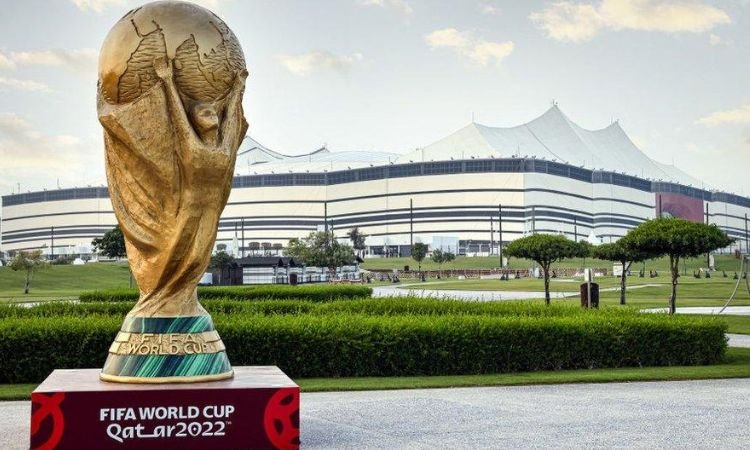
Another major strength of the Qatar World Cup was the quality and presentation of its stadium infrastructure. The tournament was hosted in highly modern venues that were visually striking, technologically advanced, and designed to project an image of ambition and sophistication. From a spectacle standpoint, the stadiums helped create a distinctive identity for the tournament. The visuals were polished, contemporary, and memorable.
For fans inside the stadiums, modern infrastructure can significantly shape the viewing experience. Good seating design, strong sightlines, cleaner facilities, organized entry systems, and efficient venue operations all contribute to how enjoyable and manageable a tournament feels. Qatar clearly invested heavily in creating stadiums that felt new, polished, and globally competitive. This helped reinforce the sense that the tournament was being staged with major financial and organizational commitment.
The visual symbolism of the stadiums also mattered. World Cups are not just sports tournaments. They are broadcast events watched by billions. The appearance of the venues becomes part of how the tournament is remembered. Qatar’s stadiums succeeded in creating a modern visual identity that stood apart from older, more traditional tournament environments. For some people, that modernity represented progress and confidence. It suggested that the host wanted to make a strong architectural and technological statement on the world stage.
Of course, impressive stadiums do not settle deeper ethical debates. But as a matter of tournament presentation, Qatar clearly succeeded in creating venues that looked and felt important. That level of infrastructure ambition remains one of the event’s most obvious positives.
4. The Tournament Brought the World Cup to a New Region
One of the most significant arguments in favor of the Qatar World Cup is that it brought the tournament to a region that had never hosted it before. This matters symbolically and politically because the World Cup is supposed to be a global event, not one limited to a small circle of familiar host regions. By taking the tournament to the Arab world, the event expanded the geographical story of international football and challenged the idea that only certain types of countries should host football’s biggest competition.
For many supporters in the region, this was deeply meaningful. It created a sense of representation and inclusion that had long been absent. Fans from Middle Eastern and Arab countries saw the tournament not as a distant global spectacle, but as something happening within their own cultural and regional space. That shift had emotional as well as sporting significance.
There was also educational value in this. A World Cup hosted in a new region exposes global audiences to different cultural settings, different visual identities, and different approaches to hospitality and public life. That can broaden the meaning of the tournament and remind people that football’s global nature should be reflected in where major events are held.
Of course, regional firsts do not excuse serious problems, and novelty alone cannot justify every hosting decision. But this pro still matters. Bringing the World Cup to a new part of the world expanded the map of football hosting and made the event feel more globally distributed. For people who believe international sport should reflect a wider range of cultures and regions, that was a genuine positive aspect of the Qatar World Cup.
5. The Event Showed Strong Organizational Capacity
Another major advantage of the Qatar World Cup was that it demonstrated a high level of organizational capacity. Hosting a World Cup is one of the most demanding tasks in global sport. It requires stadium readiness, transport planning, security coordination, broadcasting infrastructure, accommodation systems, crowd management, scheduling discipline, and constant operational oversight. Qatar faced enormous scrutiny before the tournament, which made execution even more important. In many practical respects, the event ran with visible efficiency.
This mattered because expectations were divided. Some people predicted operational failure or severe disorder. Instead, the tournament largely showed that a small but highly organized state with significant financial resources could stage a major event on an enormous scale. Whatever criticism existed around the decision to award the tournament, the host country showed that it could deliver a functioning global sporting event under intense international attention.
Strong organization also helps shape public memory. Fans may not remember every transport route or security system, but they do remember whether the tournament felt chaotic or controlled. A smooth event allows the football itself to take center stage. When operations fail, logistics become the story. In Qatar’s case, the football remained central, which suggests the event machinery worked well enough to avoid taking over the narrative.
This does not remove criticism of how the tournament came to be or what broader issues surrounded it. But in terms of pure event management, the World Cup showed that Qatar was capable of coordinating a major international tournament at a very high level. That administrative competence was one of its clearest strengths.
6. The World Cup Created a Strong Festival Atmosphere
A World Cup succeeds not only when the matches are good, but when the whole event feels alive. In Qatar, one clear advantage was the sense of concentrated festival atmosphere created by the compact structure and intense fan presence. Because key venues, fan zones, and gathering spaces were relatively close to one another, the tournament often felt socially dense. Fans from many countries crossed paths constantly, and the World Cup atmosphere remained highly visible rather than disappearing between distant host cities.
This kind of atmosphere matters because major tournaments are not experienced only inside stadiums. They are also experienced in public squares, transit spaces, hotel areas, fan festivals, restaurants, and streets full of traveling supporters. A World Cup that feels socially alive creates stronger memories and reinforces the idea that football can bring people together across national lines.
The Qatar World Cup often produced that kind of intensity. Supporters were not spread thinly across a huge country. Instead, the event felt concentrated in a way that kept the tournament atmosphere close and continuous. For many fans, that made the experience feel more immersive. The World Cup did not feel like a sequence of isolated matches. It felt like one large, shared global event happening in a compressed space.
This advantage is easy to underestimate, but it shapes how supporters remember a tournament. Atmosphere is part of football’s emotional power. A World Cup with a strong shared mood often leaves a deeper mark than one that feels fragmented. In that sense, Qatar benefited from a format that helped create energy, visibility, and a real sense of occasion beyond the football itself.
7. It Encouraged Discussion About Global Sport and Responsibility
A less obvious but still important advantage of the Qatar World Cup is that it forced a wider conversation about the meaning of global sport. The tournament did not allow football to remain isolated from politics, labor, ethics, climate, human rights, and image-making. While some people saw this as a distraction, others saw it as a necessary development. The World Cup became a platform for difficult but important questions about how major sporting events are awarded, built, and presented.
This matters because sport often claims to unite the world, yet it can also conceal enormous inequality and power. The Qatar World Cup pushed those issues into public debate. People who might otherwise have ignored them were forced to confront questions about migrant labor, political messaging, cultural double standards, and the responsibilities of governing bodies. In that sense, the tournament did more than entertain. It made the global sports conversation more serious.
There is value in that, even if the conversation was uncomfortable. A major sporting event should not exist in a moral vacuum. If the tournament made journalists, supporters, officials, and institutions think more critically about the relationship between sport and power, that has long-term importance beyond one edition of the World Cup.
Of course, it would be better if such conversations did not require controversy to happen. Still, the fact remains that the Qatar World Cup exposed tensions that global football can no longer easily ignore. In that way, the event may have contributed to a more questioning and demanding culture around future tournament hosting, and that could be one of its more lasting positive effects.
8. The Tournament Highlighted Football’s Truly Global Reach
Another important positive of the Qatar World Cup is that it reinforced the idea that football is a global sport in the fullest sense. World Cups are often described as universal, but where they are hosted sends a powerful message about who gets to be at the center of the football world. By taking the tournament to Qatar, the event challenged the assumption that football’s grandest stages naturally belong only to traditional or Western-centered hosts.
This matters because football’s fan base extends far beyond the countries that usually dominate its historical narratives. Millions of passionate supporters across the Middle East, North Africa, Asia, and beyond see the sport as central to their lives, yet major football institutions have often treated some regions as audiences rather than hosts. The Qatar World Cup shifted that pattern and symbolically expanded the map of football prestige.
The tournament also reflected the global diversity of the sport’s audience. The fan presence, the international media attention, and the broader cultural visibility all underlined how widely football resonates. This was not just a competition brought to a new place. It was a reminder that football belongs to many different parts of the world, and that global tournaments gain meaning when they move beyond old hosting patterns.
This pro does not mean every new host should escape criticism simply because it is different. But there is still real value in breaking geographical habits. Football’s biggest event should reflect football’s global reach, and in that sense the Qatar World Cup contributed to a broader, less predictable understanding of where the sport’s grandest stage can be set.
9. Many Fans Experienced an Unusually Convenient Tournament Structure
Convenience may sound like a minor point compared to football drama or ethics, but in practice it matters a great deal. One genuine advantage of the Qatar World Cup was that many fans experienced a tournament structure that was unusually convenient compared to previous editions. Shorter distances between venues, centralized accommodations, and reduced long-haul internal travel made it easier for supporters to navigate the event and stay engaged with multiple matches.
For fans who spend considerable money and effort traveling to a World Cup, convenience shapes the entire experience. A tournament can become exhausting if it requires constant domestic flights, long transfers, or repeated major relocations. Qatar’s smaller size reduced some of those burdens. Instead of spending huge amounts of time moving across a large country, many supporters could remain in one general area and still access a significant part of the event.
This convenience helped create a sense of tournament intensity as well. When fans can attend more matches and remain close to the core atmosphere, the World Cup feels denser and more immersive. It becomes easier to live inside the event rather than constantly chase it across different cities.
Of course, convenience alone does not define a great tournament, and it does not answer the wider criticism. But for many visitors, the compact structure turned out to be one of the most enjoyable practical aspects of the event. In a competition where logistics can strongly affect fan experience, that convenience was a meaningful and memorable strength.
10. The World Cup Strengthened Qatar’s International Visibility
A final major advantage of the Qatar World Cup is that it undeniably strengthened Qatar’s international visibility. Hosting the tournament placed the country at the center of global attention in a way few events ever could. For a relatively small state, this kind of visibility matters enormously. It brought Qatar into the public consciousness of people who may previously have known very little about it, and it allowed the country to shape how it wished to present itself to the world.
From Qatar’s point of view, this was a major strategic success. The World Cup gave the country a platform to display infrastructure, ambition, organizational capability, and national branding on a global scale. Whether viewers admired or criticized what they saw, the country became far more visible than before. In international relations, visibility itself can be valuable, especially for smaller states seeking influence, recognition, and cultural presence.
There is also a longer-term dimension. Global sporting events can affect tourism, business perception, diplomatic image, and cultural familiarity. By hosting the World Cup, Qatar inserted itself into international conversations that extended far beyond football. The country became part of the memory of one of the most watched sporting events in the world.
Critics may rightly argue that visibility gained through controversy is complicated. That is true. But visibility still matters, and from the host nation’s perspective, the tournament achieved that at an extraordinary scale. As a matter of national projection and global profile, the World Cup was one of the most powerful image-building opportunities Qatar could have pursued.
Cons Of Qatar World Cup
1. The Tournament Was Surrounded by Serious Labor Rights Controversies
The most significant criticism of the Qatar World Cup was the labor rights controversy linked to the construction and preparation associated with the tournament. Long before the first match was played, international attention focused on the treatment of migrant workers involved in building stadiums, infrastructure, and related facilities. This issue became central to how many people understood the tournament and remains one of the main reasons the event continues to be debated.
This mattered because the scale of the World Cup required enormous construction effort. That immediately raised questions about who was doing the labor, under what conditions, and at what human cost. When a major sporting event is built through conditions widely criticized as exploitative or unsafe, the glamour of the event becomes much harder to separate from the realities behind it.
The labor issue was not a minor public relations problem. It became a moral challenge to the legitimacy of the tournament itself. Critics argued that no amount of football brilliance or architectural beauty could fully offset concerns about workers’ rights, dignity, wages, safety, and broader systems of dependence. In that sense, the controversy cut to the heart of whether global sport can justify its spectacles when vulnerable workers carry such a heavy burden behind the scenes.
Even for fans who enjoyed the football, this issue created discomfort. It reminded the world that a World Cup is not only a month-long competition. It is also a huge industrial and political project with real human consequences. That is why labor rights remain the most serious and lasting con in any honest discussion of the Qatar World Cup.
2. The Decision to Hold It in Winter Disrupted the Football Calendar
One of the most unusual and widely criticized aspects of the Qatar World Cup was the decision to stage the tournament in winter rather than in the traditional summer period. This change happened because the host country’s climate made a normal summer tournament extremely difficult. While the winter scheduling solved one problem, it created another by disrupting domestic football calendars, European club seasons, and the rhythm to which players, fans, and institutions had long been accustomed.
This was a major issue because modern football is built around established cycles. Leagues, cups, player conditioning, broadcasting schedules, and club planning all assume the World Cup takes place after the domestic season rather than in the middle of it. The shift forced clubs and competitions to break their normal structure in order to make room for the tournament. That created strain and raised concerns about player fitness, match preparation, and broader scheduling fairness.
For many critics, this disruption symbolized a larger problem. It suggested that the global football system had been forced to bend around a host that was never naturally suited to traditional tournament timing. Instead of the host fitting the event, the event had to be fundamentally reshaped to fit the host. That left many supporters uneasy, particularly those who saw it as an avoidable distortion of the football calendar.
The winter schedule did not ruin the football itself, but it did create a major structural compromise. For many people, that compromise remains one of the clearest drawbacks of awarding the tournament to Qatar in the first place.
3. Climate Concerns Were Hard to Ignore
Another major criticism of the Qatar World Cup was the climate contradiction at its center. The event was hosted in a location whose natural conditions made a traditional summer tournament impractical, and this raised immediate concerns about sustainability. Even after the tournament was moved to winter, the broader environmental question remained: how sensible was it to hold a massive, infrastructure-heavy sporting event in such conditions?
This issue mattered for several reasons. First, the tournament’s preparation required large-scale construction and resource use. Second, cooling systems, controlled environments, and climate-adapted infrastructure added to the impression that the event depended heavily on technological solutions to overcome natural unsuitability. Critics argued that this reflected a deeper imbalance between spectacle and sustainability. In an era when global institutions increasingly talk about climate responsibility, the optics were difficult.
The environmental concern also had symbolic power. A World Cup is not just a local event. It sends a message about what global sport is willing to normalize. If enormous resources are used to create tournament conditions in a place naturally hostile to the traditional timing of the event, people understandably ask what that says about priorities.
This criticism does not mean every past World Cup was environmentally clean. Large sporting events almost always carry ecological cost. But Qatar’s case felt especially pointed because the host environment itself was part of the problem from the beginning. That made climate criticism not just an abstract concern, but one of the defining tensions of the tournament’s identity.
4. The Hosting Decision Damaged Trust in Football Governance
One of the deeper long-term negatives of the Qatar World Cup is that the hosting decision itself damaged public trust in football governance. Even before the tournament began, many people believed the award process raised serious questions about transparency, institutional credibility, and the judgment of those responsible for choosing hosts. This meant the World Cup entered public discussion under a cloud of suspicion that affected how the event was perceived from the very start.
This matters because major sporting institutions rely heavily on legitimacy. Fans may accept disagreement, but they want to believe that the biggest decisions are made through fair, serious, and credible processes. When a hosting decision appears shaped by politics, influence, or weak institutional ethics, confidence erodes. The issue then becomes bigger than one tournament. It becomes a question about whether the governing structure of global football can be trusted at all.
In the case of Qatar, many observers did not separate the event from the process that delivered it. The result was a tournament that had to prove itself not only as a football competition, but as a morally and institutionally defensible project. That burden never fully disappeared. Even people who eventually praised the football often remained skeptical about how the event came to be awarded.
This loss of trust is a serious con because it affects football beyond one edition of the World Cup. It contributes to cynicism about governance, weakens institutional credibility, and leaves supporters feeling that the sport’s biggest decisions may not always reflect the values the game publicly claims to represent.
5. Cultural Tensions Created Confusion and Conflict
Another major downside of the Qatar World Cup was the cultural tension that surrounded the tournament. Every World Cup reflects the host country’s norms to some degree, and that is natural. But in Qatar’s case, there were stronger and more visible clashes between the expectations of global football audiences and the social environment of the host. These tensions shaped the buildup to the event and influenced how many international fans, journalists, and campaign groups responded.
This mattered because the World Cup is marketed as a universal celebration. People arrive expecting a broad atmosphere of openness, shared celebration, and cultural ease. In Qatar, however, many visitors and observers felt uncertain about how freely they could behave, what forms of expression would be accepted, and how inclusive the host environment truly was. The result was confusion as well as controversy.
Some of this debate involved genuine questions about cultural respect and double standards. But some of it also involved real concern about freedom of expression, social restrictions, and whether all supporters were being welcomed equally. When those questions become central to a World Cup, they can overshadow the sport itself and create a climate of discomfort rather than uncomplicated celebration.
The issue here is not that hosts should be culturally identical. Diversity is part of the value of global sport. The problem arises when that diversity turns into a visible conflict over rights, identity, or participation. In Qatar’s case, those tensions were strong enough that they became one of the defining negatives of the tournament as a global event.
6. The Event Raised Questions About Sportswashing
One of the most widely discussed criticisms of the Qatar World Cup was the accusation that the event functioned as a form of sportswashing. In simple terms, this means using a major sporting event to improve a country’s global image, soften criticism, and project modernity or prestige in ways that may distract from more troubling realities. Critics argued that the tournament was not just about football or national pride, but also about image management on a very large scale.
This mattered because the World Cup is one of the most powerful platforms in global public life. Hosting it allows a country to shape international attention, present selective narratives about itself, and associate its name with celebration rather than criticism. For supporters of the event, that was simply part of national ambition. For critics, it raised a deeper ethical concern: should global football provide reputational cover for governments seeking prestige while serious concerns remain unresolved?
The sportswashing criticism gained force because it connected football to wider patterns in modern international politics. The issue was not just Qatar itself, but the broader question of whether major sports institutions are too willing to partner with wealth and visibility regardless of what lies beneath the surface. In that sense, the World Cup became a case study in how sport can be used strategically for soft power and image transformation.
Even people who enjoyed the tournament often found this issue difficult to dismiss completely. The event may have succeeded as spectacle, but it also intensified concern that football’s biggest stage can be used for branding in ways that complicate the meaning of success itself.
7. The Tournament’s Infrastructure Legacy Was Questioned
Large sporting events are often justified by promises of long-term legacy. Hosts claim that new stadiums, transport systems, and urban development will continue to benefit the country after the competition ends. In the case of the Qatar World Cup, one important criticism was that the long-term value of some infrastructure investments appeared uncertain. Many people asked whether the scale of construction truly matched the country’s long-term sporting and public needs.
This is a serious issue because World Cup stadiums are expensive and highly specialized. In countries with large football cultures and broad domestic demand, they may remain heavily used. In a smaller country, however, questions naturally arise about what happens next. Will all those venues remain meaningful, active, and economically sensible after the spotlight fades? Or will some of them become symbols of excess rather than of sustainable planning?
The legacy question matters not only financially but conceptually. A World Cup should ideally leave behind assets that improve public life in ways broader than the tournament itself. If infrastructure mainly serves the event and has limited long-term organic demand, then the legacy argument becomes weaker. The event may still look impressive in the moment, but the afterlife of those investments becomes harder to defend.
This does not mean all the infrastructure will be wasted. Some facilities may be repurposed or integrated into wider planning. But the scale of the investment compared with local long-term need remained a major point of skepticism, making uncertain legacy one of the strongest cons attached to the tournament.
8. Fan Experience Was Not Universally Accessible
Although many supporters praised the compact nature of the tournament, another criticism was that the fan experience did not feel equally accessible to everyone. World Cups have traditionally attracted people from many backgrounds, but the Qatar edition raised questions about affordability, accommodation pressure, and the extent to which ordinary fans could comfortably participate compared with wealthier or more organized travelers.
This issue matters because the World Cup carries a democratic ideal. In theory, it belongs to ordinary supporters as much as to sponsors, executives, or high-spending visitors. When fans begin to feel that the event is shaped more around controlled logistics, premium experiences, or high-cost travel realities, the tournament loses part of its open, public spirit.
Accessibility is not only about ticket price. It also includes accommodation availability, transport clarity, cultural comfort, food choices, and the broader ability to feel at ease in the host environment. Some supporters adapted well and had strong experiences. Others felt the tournament was harder to navigate or less naturally fan-friendly than they had hoped.
This criticism is important because fan culture is one of the foundations of football’s identity. A World Cup that feels polished but unevenly accessible can appear impressive on screen while still leaving some supporters feeling excluded or constrained. That tension between image and grassroots fan ease was one of the less dramatic but still meaningful drawbacks of the Qatar World Cup.
9. Debate Around Rights and Expression Overshadowed the Football
Another downside of the Qatar World Cup was that the debate around rights, identity, and freedom of expression became so large that it often overshadowed the football itself. While it is important that such issues were discussed, their scale changed the emotional frame of the tournament. Instead of the build-up being dominated by tactical expectations, player form, and football narratives, much of the global conversation centered on what could be said, displayed, or supported publicly.
This mattered because the World Cup is usually a celebration as much as a competition. Fans want to talk about teams, rivalries, players, and dreams. In Qatar, those football conversations often had to share space with broader arguments about expression, inclusion, and institutional consistency. For some people, that made the event feel heavier and more conflicted than a tournament ideally should.
The problem was not that rights questions were irrelevant. On the contrary, they were central. But once those questions dominate the tournament environment, the football itself can struggle to remain the emotional center of the event. Every major storyline ends up filtered through broader controversy. That changes how fans engage with the competition and how the tournament is remembered.
A World Cup can and should exist in the real world. But when off-field conflicts become so large that they define the atmosphere around the event, that is a real cost. In Qatar’s case, the football still produced unforgettable moments, yet it did so inside a broader environment of tension that shaped the tournament in ways many people found difficult to ignore.
10. The Tournament Set a Complex Precedent for Future Hosts
A final major con of the Qatar World Cup is that it set a complicated precedent for future hosting decisions. Every World Cup sends a message not only about the host itself, but about what the sport’s governing culture is willing to reward, normalize, and adapt around. Qatar’s tournament showed that with enough resources and organizational determination, a country can host the event even if serious concerns exist around climate, labor, calendar disruption, and wider political debate. For some, that was proof of possibility. For others, it was a worrying signal.
This matters because precedent shapes the future. If the lesson of Qatar is simply that any difficulty can be overcome through wealth, infrastructure, and branding, then future hosting debates may become less about suitability and more about what can be engineered or politically justified. That could push football toward a model where spectacle outruns ethical or practical caution.
The precedent issue is also institutional. Once football authorities show they are willing to radically reshape scheduling, absorb reputational controversy, and weather major criticism in order to preserve a hosting decision, observers naturally wonder what standards will apply in the future. That weakens confidence in the consistency of governance and leaves supporters asking whether almost any host can be defended after the fact if enough investment has already been committed.
This does not mean future innovation is bad. Football should not remain trapped in a small circle of predictable hosts. But the Qatar World Cup created a precedent that was bold, controversial, and morally complicated. That makes its long-term example one of the event’s most important and unresolved negatives.
Conclusion
The Qatar World Cup was one of the most complex tournaments the football world has ever seen. It delivered remarkable football, a compact and intense tournament atmosphere, modern stadium infrastructure, and a historic regional first that expanded the geographical story of the World Cup. For many fans, it was exciting, memorable, and in some practical ways more convenient than previous editions. It also demonstrated that a small state with enough resources and ambition could stage a tournament of enormous global scale.
At the same time, the tournament carried serious and lasting criticism. Labor rights concerns, climate contradictions, winter scheduling disruption, cultural tensions, governance distrust, and accusations of sportswashing all shaped the event in ways that could not be dismissed as minor side issues. These were not background complaints. They were central to how many people understood the tournament and what it represented.
That is what makes the Qatar World Cup so difficult to judge in a simple way. If someone looks only at the football, they may remember it as thrilling and historically rich. If they look mainly at the politics and ethics surrounding it, they may see it as a deeply troubling example of how global sport can be shaped by money, image, and institutional compromise. Both views contain truth.
In the end, the pros and cons of the Qatar World Cup reveal something larger than one tournament. They show that the modern World Cup is no longer just a sporting event. It is a global political, cultural, and moral stage. Qatar hosted a tournament that was successful in many visible ways and controversial in many serious ways. That combination is exactly why it will be remembered for a long time, not only as a World Cup, but as a turning point in how the world thinks about football, hosting, and the price of global spectacle.