
Placer mining is one of the oldest and most recognizable methods of extracting valuable minerals from the earth. It is most commonly associated with gold, but it can also be used to recover platinum, tin, diamonds, gemstones, and other heavy minerals. Unlike hard rock mining, which requires digging into solid rock to reach mineral veins, placer mining focuses on loose materials such as sand, gravel, clay, and sediment where valuable minerals have naturally collected over time.
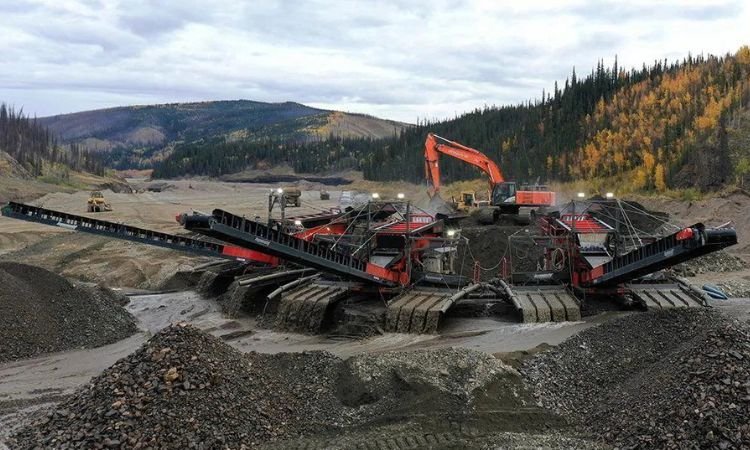
The basic idea behind placer mining is simple: heavier minerals settle in riverbeds, stream channels, beaches, floodplains, and ancient gravel deposits because they are denser than surrounding materials. Miners use water, gravity, and mechanical separation methods to recover these minerals. Traditional placer mining may involve pans, sluice boxes, rocker boxes, or dredges, while larger operations may use excavators, wash plants, trommels, pumps, and settling ponds.
Placer mining can be attractive because it may require less drilling, blasting, and underground excavation than many other mining methods. It can also provide income for small-scale miners and local communities. However, it also has serious disadvantages. It can disturb river systems, damage habitats, increase sediment pollution, consume water, and create conflicts over land and environmental responsibility.
This article explores the 10 major pros and 10 major cons of placer mining in detail. It is written to help readers understand both the economic value and environmental challenges of this mining method.
10 Pros of Placer Mining
1. Easier Access to Valuable Minerals
One of the biggest advantages of placer mining is that valuable minerals are often easier to access compared to deep underground deposits. In many placer deposits, gold or other heavy minerals are found in loose gravel, river sand, streambeds, or old sediment layers. This means miners do not always need to blast through hard rock or build deep underground tunnels.
This easier access can reduce the technical difficulty of mining. Small-scale miners can begin with basic tools such as pans, shovels, sluice boxes, and water flow. Larger operators can use machinery to process bigger volumes of material, but the basic principle remains simpler than many hard rock operations.
This accessibility has made placer mining historically important. Many gold rushes began because ordinary people could search rivers and creeks without owning advanced equipment. Even today, placer mining remains appealing in areas where mineral-bearing gravels are close to the surface.
The simplicity of access does not mean success is guaranteed. Good deposits still require testing, planning, permits, and careful processing. However, compared with many mining methods, placer mining can provide a more direct path to mineral recovery.
2. Lower Initial Investment for Small-Scale Miners
Placer mining can be less expensive to start than many other types of mining. A small-scale operation may begin with relatively simple equipment, such as a gold pan, shovel, classifier, sluice box, water pump, or small highbanker. This makes it more accessible to individuals, families, hobby miners, and small local operators.
Hard rock mining often requires expensive drilling, blasting, crushing, milling, and chemical processing. Placer mining may avoid many of these costs, especially when minerals are found in loose surface deposits. This lower entry cost can make placer mining attractive in remote or developing regions where large mining capital is not available.
Another benefit is that miners can start small and expand gradually. If early testing shows promising results, they may invest in larger equipment such as trommels, wash plants, excavators, or dredges. This step-by-step approach reduces financial risk compared to investing heavily before knowing the deposit quality.
However, low startup cost does not mean there are no expenses. Permits, fuel, transportation, repairs, water management, land access, and reclamation can still be costly. Still, placer mining remains one of the more accessible mining methods for smaller operators.
3. Uses Gravity-Based Separation
Placer mining often relies on gravity rather than complex chemical processing. Gold and many other placer minerals are much heavier than ordinary sand, clay, and gravel. Because of this weight difference, miners can separate valuable minerals using water flow, riffles, sluices, jigs, shaking tables, or centrifugal concentrators.
This gravity-based approach is one of placer mining’s strongest advantages. In many cases, it reduces the need for harsh chemicals. A well-designed sluice box or wash plant can capture heavy minerals while lighter material washes away. This makes the process mechanically simple and easier to understand.
Gravity separation can also reduce operating complexity. Miners do not always need advanced laboratories or chemical treatment plants to recover placer minerals. This is especially useful in small-scale operations and remote areas.
However, the system must be designed properly. Poor water flow, incorrect sluice angle, unsuitable matting, or excessive clay can reduce recovery. Fine gold can be difficult to capture without specialized equipment.
Even with these challenges, gravity-based recovery gives placer mining a practical advantage. It allows valuable minerals to be recovered through natural physical differences rather than complicated chemical reactions.
4. Can Provide Local Employment
Placer mining can create jobs in rural and remote areas where employment opportunities may be limited. Mining operations often need machine operators, laborers, mechanics, drivers, camp workers, surveyors, security staff, fuel suppliers, cooks, and equipment repair services. Even small operations can support local income.
In regions where agriculture, tourism, or industry is limited, placer mining may become an important economic activity. Local residents may earn money directly through mining or indirectly by supplying goods and services. Equipment rental businesses, fuel stations, repair shops, transport providers, and food suppliers can all benefit.
Placer mining can also support seasonal employment. In some regions, mining takes place during dry seasons or warmer months, giving workers temporary income. For families with few cash income options, this can be meaningful.
However, the quality of employment depends on how the operation is managed. Safe working conditions, fair wages, proper training, and legal compliance are essential. Unregulated placer mining can exploit workers or expose them to risks.
When managed responsibly, placer mining can provide economic opportunity, especially in communities where other industries are weak or unavailable.
5. Useful for Recovering Minerals from Existing Sediments
Placer mining targets minerals that have already been naturally eroded, transported, and concentrated by water or weathering. This means miners are often working with material that has already been broken down by natural processes. Unlike hard rock mining, they may not need to crush large amounts of solid rock to release minerals.
This can be efficient because nature has already done part of the work. Rivers, streams, glaciers, and waves can concentrate heavy minerals in specific places such as bends, bedrock cracks, gravel bars, old channels, and beach deposits. Skilled prospectors look for these natural traps.
This advantage can reduce energy use in some operations. Instead of blasting and crushing ore, miners wash and classify loose material. Processing loose sediment is often easier than processing solid rock.
Placer mining can also recover minerals from old tailings or previously worked areas. In some cases, older miners missed fine gold or used less efficient equipment. Modern recovery systems may capture minerals that were left behind.
Still, placer deposits are not endless. They can be patchy and unpredictable. Careful sampling is required. But the ability to recover valuable minerals from naturally concentrated sediments is a major benefit.
6. Flexible Mining Scale
Placer mining can be done at many different scales. A hobby prospector may use a pan in a stream. A small miner may operate a sluice box or highbanker. A medium-sized operation may use excavators and wash plants. A larger operation may process thousands of yards of gravel with industrial equipment.
This flexibility makes placer mining adaptable to different budgets, locations, and goals. Not every deposit requires a large corporate mining project. Some deposits are suitable for small crews, while others justify larger investments.
The ability to scale operations can also reduce risk. A miner can test ground with small equipment before committing to larger machinery. If the deposit is rich, the operation can expand. If results are poor, losses may be limited.
This flexibility is especially useful in remote regions where infrastructure is limited. Large mining projects may not be practical, but smaller placer operations can still function with portable equipment.
However, scale also affects environmental impact. A small pan operation has little disturbance, while a large mechanized placer mine can significantly alter land and water systems. Responsible planning is necessary at every scale. Still, the adaptable nature of placer mining is a clear advantage.
7. Can Be Less Technically Complex Than Hard Rock Mining
Placer mining is often less technically complex than underground or hard rock mining. Hard rock mining may require geological modeling, blasting, tunneling, ventilation, rock support, crushing plants, chemical processing, and strict underground safety systems. Placer mining usually involves excavation, washing, screening, and gravity recovery.
This simpler process can make placer mining easier to understand and operate. Small miners can learn basic recovery techniques without advanced engineering backgrounds. Larger operations still need professional planning, but the overall process is generally more straightforward than extracting ore from deep rock formations.
The reduced technical complexity can also lower training barriers. Workers may learn equipment operation, sampling, sluice adjustment, and cleanup methods more quickly than underground mining skills. This makes placer mining more accessible in areas with limited technical labor.
However, it should not be mistaken for effortless work. Successful placer mining still requires knowledge of geology, water flow, equipment setup, permits, safety, and environmental management. Poor planning can lead to low recovery and serious damage.
Even so, compared to many mining methods, placer mining’s mechanical simplicity is one reason it has remained widely practiced for centuries.
8. Can Support Mineral Exploration
Placer mining can help identify larger mineral systems. When valuable minerals are found in stream sediments, they may point toward upstream sources. Prospectors often study placer deposits to trace gold, gemstones, or other heavy minerals back to their original bedrock source.
This makes placer mining useful for exploration. Finding gold in a creek may encourage geologists to investigate nearby hills, old channels, quartz veins, or bedrock structures. In some cases, placer discoveries have led to major hard rock mining districts.
Placer sampling can also help evaluate whether an area has economic potential. By testing gravel bars, streambeds, benches, and old channels, miners can estimate mineral concentration and decide whether further work is worthwhile.
This exploration value is not limited to gold. Heavy minerals such as tin, diamonds, platinum, and rare minerals can also appear in placer deposits. Their presence may reveal important geological information.
Of course, placer minerals may travel far from their source, so interpretation requires skill. A rich placer deposit does not always mean a nearby hard rock deposit exists. Still, placer mining and sampling can provide valuable clues about mineral potential.
9. Can Produce Quick Results Compared to Some Mining Methods
Placer mining can sometimes produce results faster than other mining methods. Once a suitable deposit is identified and permits are in place, miners can begin processing material and recovering minerals relatively quickly. There is usually no need to develop deep tunnels or build large crushing circuits before seeing early production.
This faster feedback is useful for small miners and investors. Sampling can show whether a gravel deposit contains recoverable values. A test run through a sluice or wash plant can quickly reveal whether the ground is worth further work.
Quick results can help miners make practical decisions. If the recovery is poor, they can move to another area. If the recovery is strong, they can increase production. This is different from some hard rock projects, where years of development may be required before production begins.
However, quick results should not lead to careless decisions. A few good pans or test runs do not guarantee an entire deposit is profitable. Placer deposits can vary greatly over short distances.
Still, compared with many mining types, placer mining can provide a faster path from testing to recovery when conditions are favorable.
10. Historical and Recreational Value
Placer mining has strong historical and recreational value. It played a major role in famous gold rushes and helped shape many towns, migration routes, and mining cultures. Today, many people still enjoy recreational gold panning and small-scale prospecting as a hobby.
For hobbyists, placer mining can be educational and enjoyable. It teaches people about geology, rivers, sediment movement, history, patience, and outdoor skills. Families, tourists, and amateur prospectors often enjoy panning because it connects them with history and nature.
Some regions use placer mining heritage as part of tourism. Historic mining towns, museums, gold panning parks, and guided prospecting trips attract visitors. This can support local businesses and preserve cultural history.
Recreational placer mining is usually small-scale and has limited impact when done responsibly. It can create appreciation for natural resources and mining history.
However, even recreational mining must follow rules. Digging in restricted areas, disturbing streams, or using motorized equipment without permits can cause harm. When managed properly, the historical and recreational side of placer mining is a positive benefit that keeps mining heritage alive.
10 Cons of Placer Mining
1. Can Damage River and Stream Ecosystems
One of the biggest disadvantages of placer mining is its potential to damage rivers and streams. Since many placer deposits are found in or near waterways, mining can disturb aquatic habitats, streambanks, gravel beds, and natural water flow. Fish, insects, plants, and other organisms depend on stable stream conditions.
When miners dig into streambeds or redirect water, they can destroy spawning areas, reduce habitat quality, and change the shape of channels. Sediment disturbance can cover fish eggs, reduce oxygen levels, and make water cloudy. This can harm aquatic life far beyond the mining site.
Even small operations can cause problems if they are concentrated in sensitive areas. Large mechanized operations can have much greater impacts if not carefully controlled.
Responsible mining requires buffer zones, settling ponds, proper water management, and reclamation. In some places, mining directly in active streams is restricted or banned to protect ecosystems.
Placer mining may be economically useful, but river systems are fragile. Once damaged, they may take years to recover. This environmental risk is one of the most serious concerns associated with placer mining.
2. Causes Sediment Pollution
Sediment pollution is a major problem in placer mining. When miners wash gravel, dig streambanks, or disturb old sediment layers, fine particles of clay, silt, and sand can enter waterways. This increases turbidity, making the water cloudy and reducing light penetration.
High sediment levels can harm fish and aquatic insects. Fine sediment can clog fish gills, cover spawning beds, bury aquatic plants, and reduce habitat quality. It can also affect downstream water users, including farmers, communities, and wildlife.
Sediment pollution is especially serious when mining occurs during rainy seasons or near active waterways. Runoff can carry disturbed material into streams quickly. Poorly built settling ponds or waste piles can worsen the problem.
Controlling sediment requires careful planning. Operators may need settling ponds, silt fences, water recycling systems, stable tailings piles, and erosion control measures. These systems add cost and require maintenance.
In poorly regulated areas, sediment pollution can become widespread. Rivers may remain muddy long after mining stops. This is one reason environmental agencies often monitor placer mining closely and require permits before work begins.
3. Can Disturb Large Areas of Land
Placer mining can disturb large areas of land, especially when deposits are spread across wide gravel beds, floodplains, terraces, or old river channels. To recover minerals, miners may need to remove vegetation, strip topsoil, excavate gravel, process material, and create tailings piles.
This disturbance changes the landscape. Forests, wetlands, grasslands, and riverbanks may be cleared or reshaped. Wildlife habitat may be fragmented, and natural drainage patterns may be altered. In larger operations, the mined area can look completely different from its original condition.
Land disturbance is not always permanent if reclamation is done properly. Operators can recontour land, replace topsoil, plant vegetation, stabilize banks, and restore drainage. However, reclamation takes time, money, and commitment.
If miners abandon sites without restoration, the land may remain scarred for decades. Open pits, unstable piles, eroded banks, and damaged vegetation can create long-term environmental problems.
The scale of disturbance depends on mining method and regulation. Hand panning has minimal impact. Large mechanized placer mining can be highly disruptive. This makes land management one of the biggest challenges of placer mining.
4. Water Use Can Be High
Placer mining often requires a significant amount of water. Water is used to wash gravel, separate heavy minerals, run sluices, operate highbankers, feed trommels, and move sediment through recovery systems. In areas where water is limited, this can create serious problems.
High water demand can affect local streams, wetlands, farms, communities, and wildlife. If too much water is diverted, stream flow may drop, harming fish and aquatic habitats. In dry regions, competition for water can create conflict between miners and other users.
Some operations recycle water through settling ponds, which reduces total water use. However, recycling systems must be designed and maintained properly. Poor water management can lead to muddy discharge, erosion, or contamination.
Water availability can also limit mining seasons. In some areas, there may be too much water during floods and too little during dry periods. This makes planning difficult.
Although placer mining often uses water rather than chemicals, water use itself can still be an environmental concern. Responsible operators must manage water carefully to protect both mining efficiency and surrounding ecosystems.
5. Mineral Recovery Can Be Unpredictable
Placer deposits are often uneven and unpredictable. Gold or other heavy minerals may be concentrated in small pockets, cracks, layers, or old channels rather than spread evenly throughout the ground. This makes it difficult to know how profitable an area will be without careful testing.
A miner may find good values in one section and poor values only a few feet away. This patchy distribution can lead to financial risk. Equipment, fuel, labor, permits, and transportation cost money, but the recovered minerals may not always cover expenses.
This unpredictability is one reason sampling is essential. Miners need to test multiple locations, depths, and sediment layers before investing heavily. Even then, results can vary during production.
Placer mining can create excitement because valuable minerals may be found quickly, but it can also create disappointment. A deposit that looks promising on the surface may not contain enough recoverable mineral to be profitable.
For small miners, this uncertainty can be especially risky. Without proper planning, they may spend more than they recover. Placer mining may be simpler than hard rock mining, but economic success is never guaranteed.
6. Can Create Legal and Land Access Problems
Placer mining often involves complicated legal and land access issues. Miners must understand who owns the land, who controls mineral rights, whether permits are required, and what environmental rules apply. Mining without proper authorization can lead to fines, equipment seizure, legal disputes, or forced shutdowns.
Land ownership and mineral ownership are not always the same. A person may own surface land but not mineral rights. In other cases, public land may allow certain mining activities only under strict rules. Protected areas, parks, Indigenous lands, private claims, and water rights can create additional restrictions.
Disputes can also happen between miners. Claim boundaries may be unclear, or multiple people may believe they have rights to the same deposit. In gold-bearing areas, competition can become intense.
Legal requirements may include environmental permits, water permits, reclamation plans, bonding, reporting, and safety compliance. These rules are important, but they can be confusing and expensive for small operators.
Anyone considering placer mining must research local laws carefully. The minerals may be in the ground, but the right to mine them is not automatic.
7. Equipment and Fuel Costs Can Become High
Although placer mining can start with simple tools, larger operations can become expensive quickly. Excavators, loaders, pumps, wash plants, trommels, generators, hoses, sluice systems, fuel tanks, trucks, and trailers require major investment. Even small mechanized setups can cost a significant amount.
Fuel is another major expense. Mining equipment often runs for long hours and may operate in remote locations where fuel delivery is costly. Rising fuel prices can quickly reduce profit margins.
Maintenance also adds cost. Pumps break, hoses wear out, engines need service, screens clog, belts fail, and heavy equipment requires repairs. Remote operations may face delays and extra expense when parts are unavailable.
Some miners underestimate these costs because the process appears simple. They focus on the possibility of finding gold but fail to calculate operating expenses. A deposit must contain enough recoverable mineral to pay for equipment, labor, fuel, permits, reclamation, and profit.
Placer mining may have lower entry costs than some mining methods, but serious operations are not cheap. Financial planning is essential.
8. Reclamation Can Be Difficult and Expensive
Reclamation is the process of restoring mined land after mining is completed. In placer mining, reclamation may involve filling pits, reshaping land, stabilizing streambanks, replacing topsoil, planting vegetation, managing tailings, and restoring water flow. This work can be difficult and expensive.
Some miners see reclamation as a burden, but it is essential for reducing long-term environmental damage. Without reclamation, mined areas can suffer erosion, poor vegetation growth, unsafe pits, muddy runoff, and damaged wildlife habitat.
Reclamation is especially challenging in wet areas, steep terrain, permafrost regions, or sensitive ecosystems. Restoring a natural stream channel is not easy. Even after reshaping the land, it may take years for vegetation and wildlife to return.
Regulated operations may be required to post reclamation bonds or submit closure plans before mining begins. This ensures funds are available for restoration. However, small miners may struggle with the cost.
Good reclamation protects the environment and improves public trust. Poor reclamation creates long-lasting damage and gives mining a bad reputation. This responsibility is one of the major challenges of placer mining.
9. Can Lead to Social Conflict
Placer mining can create conflict between miners, local communities, environmental groups, landowners, Indigenous communities, farmers, tourism operators, and government agencies. These conflicts often arise because mining affects land, water, wildlife, and local livelihoods.
Communities may worry about water pollution, noise, road damage, increased traffic, or loss of natural beauty. Farmers may worry about water use or sediment in irrigation systems. Tourism businesses may fear that mining will damage scenic rivers or recreational areas. Indigenous communities may object to mining on culturally important land.
Miners may feel they have legal rights to work their claims and provide income for their families. Environmental groups may argue that certain areas are too sensitive to mine. These competing interests can create tension.
Social conflict becomes worse when mining is poorly regulated, communication is weak, or benefits are not shared locally. Illegal or irresponsible mining can damage trust for everyone, including responsible operators.
Successful placer mining requires more than finding minerals. It requires communication, respect for land rights, environmental care, and community awareness. Without these, conflict can become one of the biggest obstacles.
10. Environmental Damage May Outweigh Economic Benefits
The final and most serious disadvantage is that placer mining’s environmental damage may sometimes outweigh its economic benefits. If an operation produces only modest mineral value but causes major harm to rivers, wetlands, forests, or communities, the long-term cost may be greater than the short-term profit.
This is especially true when mining is unregulated or poorly managed. Damaged waterways, destroyed fish habitat, unstable land, sediment pollution, and abandoned pits can affect people and ecosystems long after the miners leave. Restoration may cost more than the minerals recovered.
Economic benefits are often immediate and visible: jobs, gold sales, equipment purchases, and local spending. Environmental costs may appear slowly and last much longer. This makes it important to evaluate the full impact before mining begins.
Responsible placer mining can reduce harm through permits, planning, water recycling, sediment control, limited disturbance, and reclamation. But not every deposit should be mined. Some areas are too sensitive, too culturally important, or too environmentally valuable.
Placer mining is only truly beneficial when mineral recovery is balanced with long-term land and water protection.
Conclusion
Placer mining is a historically important and still widely used method for recovering valuable minerals from loose sediments. Its advantages include easier access to minerals, lower entry costs for small miners, gravity-based recovery, local employment, flexible scale, and usefulness in mineral exploration. It can support communities, provide income, and preserve a connection to mining history.
However, placer mining also carries serious disadvantages. It can damage rivers, increase sediment pollution, disturb land, consume water, create legal conflicts, and require costly reclamation. Mineral recovery can be unpredictable, and irresponsible operations can leave long-term environmental harm.
The key issue is balance. Placer mining is not automatically good or bad. A small, careful operation with proper permits and reclamation may have limited impact and meaningful benefits. A poorly managed operation in a sensitive river system can cause damage that lasts for years.
Anyone interested in placer mining should understand both the opportunity and the responsibility. Success requires more than equipment and hard work. It requires knowledge of geology, water management, environmental protection, legal rights, safety, and long-term land restoration.
When done responsibly, placer mining can be a practical way to recover valuable minerals. When done carelessly, it can harm the very landscapes and waterways that make those minerals accessible. The best approach is careful planning, responsible operation, and respect for both economic value and environmental limits.