
The Cold War was a defining period of the 20th century, lasting from the end of World War II in 1945 to the dissolution of the Soviet Union in 1991.
It was not a conventional war marked by open military confrontation between the United States (and its Western allies) and the Soviet Union (and its Eastern bloc allies), but rather a prolonged period of political tension, ideological conflict, and military rivalry that spanned across the globe.
The Cold War was characterized by proxy wars, nuclear arms races, espionage, and ideological battles between capitalism and communism. It fundamentally reshaped global geopolitics and left a lasting impact on international relations, economics, and social structures.
While the Cold War is often remembered for the looming threat of nuclear war, proxy conflicts in places like Vietnam, Afghanistan, and Korea, and the deep divide between East and West, it also brought about significant technological, political, and economic changes. The era’s intense competition led to unprecedented advances in science, technology, and education.
Moreover, the geopolitical competition spurred political reforms in many countries and influenced social movements that ultimately reshaped the world order. The Cold War created a bipolar world, split between two superpowers, but it also fostered multilateral cooperation through institutions such as the United Nations (UN), and provided the foundation for the modern global economy.
However, the Cold War was far from idyllic, as it also led to devastating consequences, including proxy wars, political repression, nuclear proliferation, and human rights abuses. The division of Germany, the wars in Korea and Vietnam, and the rise of authoritarian regimes supported by both the U.S. and the Soviet Union were dark chapters in this era. Moreover, the arms race and the constant threat of nuclear war created an atmosphere of global anxiety and insecurity.
This article delves into both the positive and negative impacts of the Cold War, examining its long-lasting effects on global power dynamics, technological innovations, and social transformations, while also acknowledging the human cost and ethical challenges that arose during this tense period.
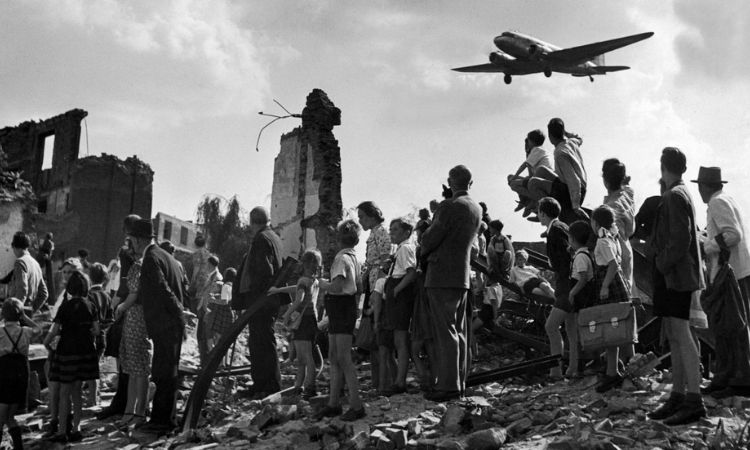
10 Pros of the Cold War
1. Technological Advancements: Space Race and Nuclear Energy
The Cold War era was marked by intense technological rivalry, with the United States and the Soviet Union competing to establish dominance in critical fields like space exploration and nuclear technology. The Space Race, one of the most prominent aspects of this competition, led to monumental achievements, such as the launch of Sputnik, the first artificial satellite, by the Soviet Union in 1957, and the United States’ moon landing in 1969. These events pushed the boundaries of science and technology, not only advancing our understanding of space but also contributing to developments in materials science, communications, and computing.
In the realm of nuclear technology, both superpowers heavily invested in the development of nuclear energy for civilian and military use. The U.S. and the Soviet Union developed advanced nuclear reactors that laid the groundwork for global nuclear energy production. Furthermore, innovations made during the Cold War in rocket technology, satellite communications, and nuclear power continue to influence modern technologies, from telecommunications to space exploration.
While the Cold War’s technological race was driven by military competition, many of the advancements made during this period have had profound positive impacts on civilian industries and global scientific collaboration, fostering innovations that continue to shape our world today.
2. Economic Growth and Recovery in the West
The Cold War period, particularly after World War II, coincided with an era of economic prosperity in the West, especially in the United States. The rivalry with the Soviet Union prompted significant military spending and investment in defense technologies, stimulating growth in the aerospace, defense, and manufacturing industries. The military-industrial complex became a central feature of the U.S. economy, providing thousands of jobs and contributing to overall economic stability.
Additionally, the U.S. and its allies supported the Marshall Plan, a U.S.-funded initiative that provided economic aid to rebuild war-torn Europe. This plan, which aimed to counter the spread of communism by stabilizing European economies, helped revitalize European industries, promote international trade, and solidify the West’s commitment to capitalist democracy. Over the following decades, both Europe and the U.S. experienced a period of economic expansion, resulting in a growing middle class and the rise of global consumerism.
While Cold War tensions contributed to economic militarization, the economic boom in the West also encouraged technological innovation, infrastructure development, and the spread of capitalist market systems, which had enduring effects on global trade and economic development.
3. Nuclear Deterrence and Global Stability
One of the paradoxical benefits of the Cold War was the concept of nuclear deterrence. The arms race between the U.S. and the Soviet Union led both superpowers to stockpile nuclear weapons and develop advanced military technologies. However, this nuclear standoff ultimately played a stabilizing role in global politics. The idea of mutually assured destruction (MAD)—the notion that any nuclear conflict between the two superpowers would lead to total annihilation on both sides—prevented large-scale direct warfare.
While the threat of nuclear war was ever-present, the Cold War effectively prevented military conflict between the U.S. and the Soviet Union. The sheer destructive potential of nuclear weapons forced both sides to adopt a policy of diplomacy and negotiation to resolve conflicts, avoiding full-scale war. This principle of deterrence helped maintain a balance of power during the Cold War, leading to relative peace between the two superpowers for much of the period.
4. Expansion of Global Political Influence
The Cold War saw both the U.S. and the Soviet Union extend their political influence across the globe, shaping the political landscape of many countries. The U.S. led the charge for the spread of capitalist democracy, forming alliances like NATO, and promoting free-market economies in regions like Western Europe, the Middle East, and Latin America.
On the other hand, the Soviet Union promoted communism and sought to spread its political ideology to countries in Eastern Europe, Asia, and Africa. This geopolitical competition influenced the political systems of many newly independent countries, with some aligning with the West and others with the Soviet bloc. These ideological battles were often played out in proxy wars, but they also contributed to the formation of new political alliances and the self-determination of countries worldwide.
The rivalry between the superpowers also prompted the creation of international organizations such as the United Nations (UN) and World Trade Organization (WTO), which played key roles in conflict resolution and international diplomacy, helping to mediate tensions and foster global cooperation.
5. Cultural and Social Change in the West
The Cold War also had a significant influence on cultural and social change, particularly in the United States. Faced with the Soviet Union’s promotion of communism and totalitarianism, the U.S. government sought to showcase its political and social freedoms as the ideal alternative. This competition spurred significant social reforms, particularly in the area of civil rights.
The U.S. was under international scrutiny during the Cold War, with much of its racial inequality and discrimination being highlighted in Soviet propaganda. In response to this, the U.S. government began to make significant efforts to address these issues, culminating in the Civil Rights Movement of the 1960s. Landmark achievements such as the Civil Rights Act of 1964 and the Voting Rights Act of 1965 were directly influenced by the U.S.’s desire to demonstrate its moral superiority over the Soviet Union.
The Cold War also fostered an era of cultural innovation in the West, with an emphasis on freedom of expression and individual rights. These changes had a profound impact on women’s rights, LGBTQ+ movements, and the counterculture of the 1960s, helping to shape modern societal norms.
6. Advances in Medical Research
The Cold War led to advancements in medical research, particularly in areas like vaccination, disease prevention, and psychology. The competition between the U.S. and the Soviet Union pushed both countries to fund research initiatives, resulting in progress in healthcare technologies and treatment protocols. For example, the U.S. invested heavily in medical technologies to support its military readiness, which later found civilian applications.
Additionally, space research driven by Cold War competition resulted in innovations like telemedicine, as technologies developed for space missions were adapted for healthcare purposes. Advances in psychology and mental health treatment also arose as both sides sought to address the needs of soldiers and civilians living in high-stress environments.
7. Strengthening of Military Alliances
The Cold War saw the solidification of military alliances that continue to influence global politics today. NATO, established in 1949 as a military alliance of Western countries, became a central feature of Cold War defense strategy. NATO’s influence expanded in response to the threat posed by the Soviet Union, fostering a unified defense strategy across much of Europe and North America.
This unity also contributed to the formation of bilateral agreements and security pacts between the U.S. and its allies, leading to increased military cooperation and joint defense initiatives that persisted beyond the Cold War. The global security network built during this period continues to shape international relations and military strategy today.
8. Expansion of Educational and Research Institutions
The Cold War was a time of significant investment in education and research. Both the U.S. and the Soviet Union recognized the importance of scientific advancement in maintaining global superiority, which led to increased funding for research and higher education institutions. In the U.S., the National Defense Education Act of 1958 provided funding to strengthen the nation’s educational system, particularly in STEM (Science, Technology, Engineering, and Mathematics) fields.
Universities and research institutions were key to the development of new technologies during the Cold War, and many of the foundational breakthroughs in computer science, artificial intelligence, and biotechnology can be traced back to the Cold War period. The intense competition between the superpowers also promoted scientific collaboration in certain fields, despite political tensions.
9. Globalization and Free Trade
The end of the Cold War ushered in a new era of globalization and free trade, as the collapse of the Soviet Union led many former communist states to embrace market economies. The U.S. and its allies pushed for free-market policies and the integration of former Soviet bloc nations into global trade systems. This shift towards economic liberalization laid the groundwork for the rise of global capitalism.
As a result, nations formerly aligned with the Soviet Union began to transition into market economies, leading to an expansion of global trade and cooperation. The integration of countries in Eastern Europe and Asia into the World Trade Organization (WTO), for example, helped expand global commerce and foster economic growth.
10. Post-Cold War Global Diplomacy
Following the end of the Cold War, diplomatic relations between former adversaries began to improve, leading to the expansion of international organizations and peacekeeping missions. The collapse of the Soviet Union created new opportunities for diplomatic dialogue, as former Cold War allies sought to engage in cooperative ventures. The UN, along with regional organizations like the European Union (EU), played a more significant role in managing post-Cold War conflict, promoting stability, and working towards global peace.
10 Cons of the Cold War
1. Constant Threat of Nuclear War
One of the most significant drawbacks of the Cold War was the ever-present fear of nuclear annihilation. The arms race between the U.S. and the Soviet Union led to the development of thousands of nuclear weapons, capable of destroying entire countries in minutes. The Cuban Missile Crisis of 1962, where the U.S. and the USSR came close to nuclear war, highlighted the dangerous nature of this arms buildup.
The constant threat of mutual destruction created a climate of global fear, where millions lived under the shadow of potential annihilation. While the nuclear deterrence strategy ultimately prevented a direct war, it also perpetuated an arms race that diverted significant resources away from social and economic development.
2. Proxy Wars and Human Suffering
Though the U.S. and the Soviet Union did not engage in direct conflict, the Cold War led to numerous proxy wars that caused immense human suffering. Both superpowers supported factions in wars around the world, often without regard for the human cost. The Vietnam War, Korean War, and Afghanistan War are just a few examples of conflicts that saw millions of people killed, displaced, and subjected to brutal conditions, as both the U.S. and the Soviet Union competed for global dominance.
These wars not only caused direct suffering but also resulted in long-term political instability, economic ruin, and societal breakdown in the affected regions. The Cold War’s proxy conflicts left deep scars on countries, particularly in Southeast Asia and Africa, where many nations experienced political and social upheaval for decades.
3. Political Repression and Authoritarianism
The Cold War era saw the rise of authoritarian regimes supported by both superpowers in the name of ideological alignment. The U.S. often backed military dictatorships in Latin America and parts of Africa, while the Soviet Union propped up oppressive communist regimes in Eastern Europe and Asia. This global support for repressive governments led to widespread human rights abuses, including censorship, imprisonment, and torture.
Many of these regimes were not only responsible for internal repression but also suppressed civil society and opposition movements that challenged their control. The Cold War indirectly contributed to the perpetuation of authoritarian rule, which prevented the growth of democratic institutions and the protection of human rights in many parts of the world.
4. Economic Inequality and Military Expenditures
The Cold War was marked by massive military spending, particularly in the U.S. and the Soviet Union, where enormous resources were funneled into the production of nuclear weapons, military hardware, and defense infrastructure. This focus on military expenditures diverted funds from crucial social programs, such as healthcare, education, and poverty alleviation.
As a result, both the U.S. and Soviet Union struggled with economic inequality, despite their global political aspirations. The military-industrial complex became entrenched in both systems, prioritizing defense spending over social welfare, leading to disparities in wealth distribution and public services.
5. Division of the World into Spheres of Influence
The Cold War created a bipolar world, divided into two opposing spheres of influence: one led by the U.S. and the other by the Soviet Union. This division stifled international cooperation and promoted ideological conflict. Countries were often forced to choose sides, with some aligning with the West and others with the East, leading to further political polarization.
This ideological division also led to the splitting of nations, most famously in the case of Germany, which was divided into East and West. The division of Korea, Vietnam, and many African countries along Cold War lines created deep tensions that have persisted long after the conflict ended.
6. Cultural Suppression and Propaganda
Both the United States and the Soviet Union used propaganda to promote their ideologies and suppress dissenting views. In the Soviet Union, freedom of expression was tightly controlled, and citizens were punished for opposing the regime. In the U.S., fear of communism led to the McCarthy Era, during which suspected communist sympathizers were persecuted, leading to censorship and the loss of civil liberties.
The ideological struggle of the Cold War created an atmosphere of intolerance and censorship that suppressed creativity and stifled intellectual freedom. Artists, writers, and academics on both sides were often pressured to conform to state ideologies, limiting cultural expression and critical thought.
7. Lasting Environmental Damage
The Cold War had a profound environmental impact, particularly due to the extensive nuclear tests conducted by both the U.S. and the Soviet Union. These tests, conducted in remote areas such as the Nevada desert and Soviet test sites, resulted in radioactive contamination of the environment. The long-term effects of these tests contributed to health problems for people living near test sites and caused widespread environmental degradation.
In addition to nuclear testing, the arms race led to the production and disposal of toxic chemicals and waste from military manufacturing processes, which had lasting effects on local ecosystems. The environmental damage caused by the Cold War era is still felt today in some regions, particularly those that were used for nuclear testing.
8. Cultural Isolation
The Cold War contributed to a period of cultural isolation between the Eastern and Western blocs. Travel restrictions, limited cultural exchanges, and the iron curtain between East and West prevented many individuals from experiencing each other’s cultures. This cultural divide hindered the free exchange of ideas, scientific knowledge, and artistic expression, creating barriers between societies that could have benefited from cross-cultural collaboration.
The Cold War also led to the spread of propaganda and stereotypes about both sides, leading to mutual misunderstanding and mistrust. The focus on ideological purity in both blocs suppressed the development of cross-cultural dialogue and mutual understanding, which could have otherwise contributed to global peace.
9. Suppression of Dissenting Voices
Throughout the Cold War, dissent was often met with heavy repression. In both the United States and the Soviet Union, individuals who opposed the dominant ideological narratives were often silenced, punished, or persecuted. In the U.S., the McCarthy hearings and red scare led to the persecution of suspected communists, while in the Soviet Union, dissidents were routinely exiled, imprisoned, or executed.
This suppression of dissent undermined the democratic ideals of freedom of speech and expression, which both superpowers claimed to champion. By silencing critics, the Cold War allowed authoritarian practices to flourish in both the East and the West, diminishing the quality of political debate and stifling reform movements.
10. Political Polarization and the Cold War Mentality
Finally, the Cold War fostered a polarized world where conflicts were often viewed through a lens of us versus them. This mentality deepened international divisions and created a culture of suspicion and hostility that endured well beyond the Cold War’s end. Even today, remnants of the Cold War mentality can be seen in U.S.-Russia relations and in various regional conflicts where ideological lines still remain drawn.
The Cold War mentality contributed to entrenched political divisions, where cooperation between different ideological groups became increasingly difficult. This polarization continues to affect global relations, contributing to geopolitical instability and the persistence of conflicts rooted in the Cold War era.
Conclusion
The Cold War, lasting nearly half a century, left a profound impact on the global political, social, and economic landscape. While the period sparked remarkable technological advancements, economic growth, and cultural transformations, it also generated significant human suffering, political repression, and global divisions that continue to influence international relations today.
By understanding the pros and cons of the Cold War, we gain a more nuanced perspective on how ideological conflicts can drive both innovation and destruction. The lessons learned from this turbulent period remind us of the importance of diplomacy, cooperation, and the responsible use of power in the modern world. Though the Cold War has ended, its legacy remains an important factor in shaping contemporary global dynamics.