
Fishing has always been a pursuit of skill, patience, and sometimes a bit of luck. But with the advent of modern technology, anglers now have a variety of tools at their disposal to increase their chances of success. One such tool that has revolutionized the fishing experience is the fishfinder, powered by a transducer that uses sonar waves to map underwater environments.
Historically, transducers have been mounted to the hull of the boat, providing a static view of the underwater world beneath the vessel. However, in recent years, there has been a shift toward mounting transducers directly onto trolling motors, offering a more dynamic approach to scanning underwater landscapes.
Trolling motors have become an essential piece of equipment for anglers, allowing for more precise and controlled movements at slow speeds, which is ideal for fishing. When the transducer is mounted on the trolling motor, it moves with the boat, offering a real-time view of what lies beneath.
This mounting method provides several advantages, but it also introduces some potential drawbacks that could affect the quality of sonar readings and the durability of the equipment.
In this article, we will explore the pros and cons of mounting a transducer on a trolling motor in detail. We will cover ten significant advantages, followed by ten potential disadvantages, giving you a well-rounded understanding of this mounting method. The goal is to help you decide whether mounting your transducer on your trolling motor is the right choice for your fishing setup.
Whether you’re a seasoned angler or just getting started, understanding these factors can help you make an informed decision that will enhance your fishing experience.
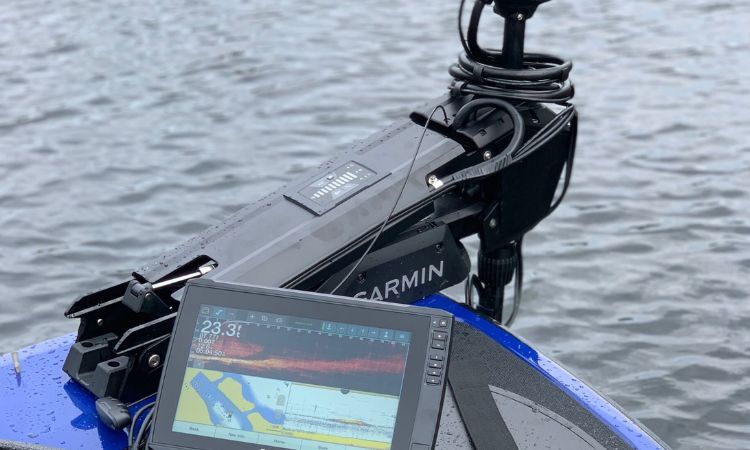
Pros of Mounting a Transducer on a Trolling Motor
1. Improved Sonar Clarity and Accuracy
One of the most significant advantages of mounting a transducer on the trolling motor is the improved sonar clarity and accuracy it offers. Hull-mounted transducers can sometimes suffer from interference due to factors such as the boat’s hull material, speed, and water conditions. The hull may cause sonar waves to scatter or reflect, leading to inaccurate readings. Additionally, the water between the boat’s hull and the fishfinder can cause distortion, particularly in murky or turbulent waters.
When you mount the transducer directly on the trolling motor, it’s positioned closer to the water’s surface and in direct contact with the water column. This setup eliminates the interference caused by the boat’s hull, allowing for clearer, more accurate sonar images. With the transducer in a better location to receive signals, the result is less noise and more precise readings of underwater structures, fish, and the bottom contour. As you move the motor around, the sonar is more adaptable, giving you a clearer picture of the underwater world in real time. Whether you are fishing in shallow or deep waters, this enhanced clarity makes a significant difference in finding fish and understanding underwater terrain.
2. Real-Time Feedback and Enhanced Control
Another major benefit of mounting a transducer on the trolling motor is the real-time feedback it provides. Unlike a hull-mounted transducer, which remains fixed in one position on the boat, the transducer on the trolling motor moves with the motor. This allows the angler to steer the boat while simultaneously observing live sonar data. When you’re slowly trolling or maneuvering the boat through tight spaces, you get constant, up-to-date feedback about the underwater environment.
Real-time data is incredibly useful for making immediate decisions on your fishing strategy. For example, if you detect fish or a change in underwater structures, you can quickly adjust the trolling motor’s position to focus on a specific area. The ability to control the sonar direction while controlling the motor gives you more flexibility and precision during your fishing sessions. This type of feedback allows you to adapt your strategy instantly, which is particularly beneficial when fishing in unfamiliar areas or exploring different depths to find the most productive fishing spots.
3. More Accurate Fish Detection
For avid anglers, one of the key reasons to invest in sonar technology is to accurately detect fish. Mounting the transducer on the trolling motor allows you to pinpoint fish with greater accuracy. Traditional hull-mounted transducers can sometimes give vague or unclear readings, particularly when moving at low speeds or in shallow waters. This is because the transducer is fixed and can miss fish or structures that lie outside of its immediate scan area.
A trolling motor-mounted transducer, on the other hand, is constantly moving, just like the boat, and can be aimed more precisely to detect fish directly beneath or around you. By adjusting the trolling motor’s direction, you can easily scan different areas, helping you pinpoint fish that might be hiding under rocks, submerged trees, or other structures. This ability to move the transducer with the motor allows you to focus your sonar readings on specific areas of interest, such as drop-offs or underwater features, enhancing your chances of catching fish. It essentially brings you closer to the action by providing clearer, more precise fish detection at all times.
4. Better Coverage of Shallow Areas
Fishing in shallow waters often presents unique challenges. In these areas, hull-mounted transducers can be less effective due to the proximity of the boat’s hull to the bottom. The sonar signal can bounce off the shallow substrate, causing inaccurate or incomplete readings. Additionally, hull-mounted transducers may struggle to properly detect fish in very shallow areas or in waters with debris or obstructions.
A trolling motor-mounted transducer, however, is often better suited for these conditions. Since the trolling motor is located closer to the surface of the water, the sonar signal has a better chance of reaching the fish and structures below without interference from the boat’s hull. This setup allows for better coverage in shallow areas, making it easier to identify fish, submerged structures, and bottom features. Whether you’re fishing near the shoreline or in a shallow bay, the trolling motor’s ability to position the transducer at different angles provides a significant advantage when fishing in such areas.
5. Easier to Adjust During Fishing
Flexibility is one of the main benefits of mounting a transducer on the trolling motor. When you’re out on the water, conditions can change rapidly. You may find that a certain area is producing fish, or you might come across a promising submerged structure that’s worth investigating. In these situations, it’s crucial to have the ability to adjust your equipment quickly.
With a trolling motor-mounted transducer, adjustments are easy. You can change the angle of the transducer or move the motor to different spots on the water, all while keeping the sonar readings in real-time. This level of adjustability allows you to cover a variety of underwater features without missing key areas. The constant ability to reposition and fine-tune your sonar is a powerful tool that can help you discover new fishing spots, adapt to changing water conditions, and improve your overall fishing success.
6. Avoids Potential Hull Interference
When a transducer is mounted on the hull of a boat, it can sometimes be affected by the boat’s materials, shape, or even its speed. For example, fiberglass boats or boats with a lot of metal can sometimes cause signal interference, resulting in inaccurate sonar readings. The composition and design of the hull can also create turbulence that affects the clarity of the sonar images. This interference can be particularly troublesome in waters with a lot of debris or strong currents.
Mounting a transducer on the trolling motor eliminates these potential sources of interference. Because the motor is placed directly in the water and away from the hull, the sonar readings are not influenced by the materials or turbulence created by the boat. This makes the sonar data clearer and more reliable, even when fishing in challenging water conditions. As a result, your fishfinder will give you a better, more accurate picture of what’s beneath the water, improving your fishing experience.
7. Low-Speed Maneuverability
Trolling motors are known for their ability to provide precise control at low speeds, which is ideal for fishing. Whether you are slowly trolling for fish, navigating through narrow waterways, or drifting across a fishing hotspot, the trolling motor allows you to make small, controlled adjustments to your position. This low-speed maneuverability pairs perfectly with sonar technology, especially when mounted on the trolling motor.
When you are trolling slowly, the sonar readings become more stable, providing a clearer view of the underwater environment. The motion of the boat is gradual, and the sonar signal has enough time to travel and return without distortion or interference. This is especially important when fishing for species that are skittish or when trying to scan bottom structures in greater detail. The ability to move slowly and steadily while receiving high-quality sonar data helps you stay in the sweet spot for longer periods, increasing your chances of success.
8. Helps with Bottom Structure Scanning
Scanning the bottom for structures such as submerged rocks, drop-offs, or underwater ledges is a critical part of fishing. These structures often serve as hiding spots for fish, making it essential for anglers to identify them accurately. A trolling motor-mounted transducer gives you the advantage of scanning these structures with precision, thanks to the motor’s ability to move the boat slowly and adjust direction easily.
Unlike a stationary hull-mounted transducer, the trolling motor allows you to target specific areas of the bottom and move to different depths with ease. As you move around the area, the transducer can provide a continuous flow of data, showing you exactly where fish might be hiding. Whether you’re fishing in a lake, river, or coastal environment, being able to precisely scan the bottom structure while moving the motor provides a big advantage in finding the most productive spots.
9. Easier Installation
Mounting a transducer on the trolling motor is often simpler and less complicated than installing a hull-mounted unit. Many modern trolling motors come with pre-designed brackets or mounting locations for transducers, making the installation process quick and straightforward. In contrast, hull-mounted transducers often require drilling into the boat’s hull, which can be time-consuming, and in some cases, it might void warranties or require professional installation.
A trolling motor-mounted transducer can typically be installed by the angler themselves, without the need for complex tools or procedures. This ease of installation not only saves time but also avoids the need for modifications to the boat’s hull, which can sometimes be costly or irreversible. If you’re looking for a more flexible and cost-effective solution for mounting your transducer, the trolling motor is an excellent option.
10. Cost-Effective Solution for Smaller Boats
For anglers with smaller boats or those on a budget, mounting the transducer on the trolling motor can be a cost-effective solution. It eliminates the need for expensive hull modifications or custom brackets, and since many trolling motors already come with built-in mounting options for transducers, the setup costs can be minimal. This is particularly beneficial for those who may not want to invest in a full fishfinder system with a hull-mounted transducer. Instead, they can achieve a comparable level of sonar performance without the extra expenses associated with hull modifications or additional equipment.
Cons of Mounting a Transducer on a Trolling Motor
1. Reduced Depth Sounding Range at High Speeds
One of the main limitations of mounting a transducer on the trolling motor is that it is less effective at higher speeds. While trolling motors are excellent for slow-speed maneuvering, they are not designed for high-speed cruising. At high speeds, the sonar readings may become less accurate, and the transducer might struggle to provide reliable data.
At faster speeds, the boat moves too quickly for the sonar waves to return clear and accurate readings from deeper waters. This limits the range of the transducer and reduces its ability to map the underwater environment effectively. Hull-mounted transducers, on the other hand, can typically function at higher speeds, providing deeper and more reliable readings even when the boat is moving quickly. If you frequently fish in deeper waters or need to cover large areas quickly, the reduced depth range at high speeds may be a significant disadvantage of the trolling motor-mounted setup.
2. Increased Wear and Tear on the Transducer
A trolling motor-mounted transducer is exposed to more physical stress than one mounted on the boat’s hull. As the trolling motor moves through the water, the transducer is subject to impacts from submerged obstacles, such as rocks, branches, or other debris. Over time, this can lead to physical wear and tear, damaging the transducer or affecting its performance.
Since the trolling motor is constantly in motion, it’s also more susceptible to damage from collisions with underwater objects. These impacts can cause the transducer to become misaligned, cracked, or even completely destroyed. Hull-mounted transducers are generally better protected from such impacts because they are stationary and often positioned in less risky areas of the boat. Consequently, if you regularly fish in areas with lots of underwater obstructions, the increased wear and tear on the transducer could be a significant disadvantage.
3. Susceptibility to Water Contaminants
Water quality plays a huge role in the effectiveness of sonar readings. Trolling motor-mounted transducers are more likely to become clogged with debris, algae, or other water contaminants, especially in shallow or murky waters. When this happens, the sonar readings can become distorted or unclear, reducing the overall performance of the fishfinder.
Cleaning the transducer regularly is essential to maintain its efficiency, but this can be time-consuming and inconvenient, especially when fishing in remote locations or during extended trips. Hull-mounted transducers, on the other hand, are less prone to debris buildup because they are typically located in deeper, less disturbed waters. This makes them less susceptible to the effects of contaminants, though they are not entirely immune. However, the need to regularly check and clean a trolling motor-mounted transducer can be a hassle, especially if you fish in water with a lot of plant life or floating debris.
4. Limited Range of Motion and Scan Coverage
While trolling motors provide excellent maneuverability, the range of motion for the transducer is limited compared to a hull-mounted setup. A hull-mounted transducer can continuously scan a broader area, providing a more comprehensive view of the underwater environment without having to move the boat as much. In contrast, the trolling motor-mounted transducer is confined to the area around the boat, which limits the ability to scan larger expanses of water.
If you need to cover a wide area or scan deeper waters quickly, the limited range of motion can be a hindrance. While the trolling motor allows for some level of directional control, it can only scan the immediate area around the boat, leaving you with fewer options for broad-area scans. This is particularly limiting when fishing in large bodies of water where you need to cover a lot of ground to locate fish or structures.
5. Interference from Motor Noise
While trolling motors are generally quieter than traditional outboard engines, they still produce noise and vibrations that can interfere with sonar readings. The motor’s electrical components and moving parts generate noise, which can cause interference in the sonar signal, resulting in unclear or inaccurate data.
This noise interference is more noticeable at lower speeds or when the motor is running at a constant speed for long periods. Hull-mounted transducers are generally less affected by noise since they are placed further away from the motor, and the hull itself provides some insulation. However, with the transducer mounted on the trolling motor, you risk encountering electrical or mechanical interference that can disrupt the clarity of sonar data, especially when trying to capture more sensitive underwater details.
6. Limited Stability in Rough Water
A trolling motor-mounted transducer is typically less stable in rough water conditions compared to a hull-mounted transducer. When fishing in choppy or turbulent waters, the constant motion of the trolling motor can cause the transducer to shift or vibrate, leading to unstable sonar readings. This instability can result in distorted images or inaccurate data, especially in deeper waters or areas where precise readings are necessary for detecting fish.
Hull-mounted transducers benefit from the stability of the boat’s hull, which provides a fixed position and reduces the effects of rough waters. While trolling motors are designed to handle small swells and waves, they can struggle with maintaining consistent performance in larger, more turbulent conditions. If you’re fishing in an area with high wind or strong currents, the additional movement introduced by the trolling motor can further complicate sonar readings.
7. Potential for Electrical Interference
Trolling motors are often powered by the boat’s electrical system, which can sometimes lead to interference with the sonar signal. This is especially true if the trolling motor and fishfinder share the same power source, as the electrical components may cause noise or flickering on the sonar display. Additionally, if the boat has other electronic equipment like radios, lights, or depth finders running off the same system, the signal could suffer from electrical interference.
Hull-mounted transducers generally avoid this issue because they are not exposed to the same electrical environment. The power source for the boat’s electronics is separate from the sonar system, which reduces the likelihood of interference. Electrical issues can be frustrating, as they might require additional troubleshooting or the installation of noise filters to resolve. If you are using multiple devices on your boat, this type of interference may become a significant issue when mounting a transducer on your trolling motor.
8. Higher Risk of Transducer Damage from Collision
One of the biggest concerns with mounting a transducer on a trolling motor is the increased risk of physical damage. As the trolling motor moves through the water, the transducer can be exposed to underwater obstacles like rocks, submerged trees, debris, or sandbars. Since trolling motors are often used in shallow waters where these types of obstacles are more common, the transducer is at a higher risk of being struck or damaged.
Hull-mounted transducers are generally located in deeper waters, reducing the likelihood of physical impact. While they too can encounter damage from hitting underwater objects, the risk is lower due to their more protected placement. With a trolling motor-mounted transducer, you may find yourself needing to replace or repair the device more often due to the frequent collisions with underwater structures, which can be costly and time-consuming.
9. Loss of Real-Time Information When the Motor is Off
When the trolling motor is not in use, the transducer loses its ability to provide real-time sonar readings. Hull-mounted transducers, on the other hand, continue to send sonar signals even when the boat is stationary. This can be particularly beneficial if you are looking for fish while drifting or anchored. The constant flow of sonar data helps anglers maintain a clear picture of the underwater environment, even when not actively moving the boat.
In contrast, a trolling motor-mounted transducer only works when the motor is engaged. If you’re fishing in an area where you need to remain stationary, or if you’re taking a break from trolling, the transducer will not provide useful information. This limitation can restrict your ability to gather important sonar data when the motor isn’t running, making it a disadvantage in certain fishing situations.
10. Limited Transducer Mounting Options for Certain Motors
Not all trolling motors are designed with easy integration for mounting a transducer. Depending on the model and make of the trolling motor, you may find that the mounting options are limited or non-existent, requiring additional parts or modifications to install the transducer. This can add unnecessary complexity to the process and may involve extra costs for special adapters or mounting kits.
Additionally, some trolling motors may have designs that make it difficult to securely attach a transducer without affecting the motor’s operation or the boat’s balance. If the trolling motor lacks a built-in mounting solution, you may have to go through a series of trial and error to find the optimal placement for your transducer. This can be frustrating for anglers who are looking for a simple, hassle-free setup.
Conclusion
Mounting a transducer on a trolling motor presents several compelling advantages, particularly for anglers who prefer precise control, real-time feedback, and greater maneuverability when fishing. The ability to get clearer sonar images, particularly in shallow waters, and the enhanced flexibility to adjust the transducer’s position as you move the boat are significant benefits. The trolling motor-mounted transducer also offers easier installation and is a cost-effective solution for smaller boats.
However, this mounting method comes with its own set of challenges. The transducer’s performance at high speeds is limited, and it is more prone to wear and tear due to its exposure to physical impacts and water contaminants. Additionally, issues such as electrical interference, the inability to provide real-time sonar data when the motor is off, and the limited mounting options for some trolling motors can detract from the overall effectiveness of this setup.
Ultimately, the decision to mount a transducer on a trolling motor depends on the specific needs of the angler and the type of fishing they do. If you often fish in shallow areas, prioritize low-speed precision, and value flexibility, this setup could be highly beneficial. However, if you fish in deep waters, cover large areas, or need consistent sonar data regardless of motor use, you may find a hull-mounted transducer to be a better fit.
By carefully weighing the pros and cons presented in this article, you can make an informed decision that best suits your fishing style and equipment. Happy fishing, and may your sonar always lead you to the big catch!